Don't Build Your Own Playbook
Every offseason a coach opens a blank document and starts drawing plays. It feels like the most serious thing you can do for your team. It is usually the first mistake of the season, and the defense will be the one who tells you.
Take a playbook from someone who already spent years on it, and change it to fit your kids. That is not a shortcut. It is the better version of the job.
The part nobody warns you about
The efficiency argument is the one you have heard. Fewer plays, run better. It is true. It is also not the interesting part.
Here is the interesting part. When you invent your own install without deliberately designing your looks, you tend to build one formation per play. You draw a play, you draw the formation it works from, you move on. Do that twenty times and you have handed the defense a key.
I watched this happen to a team we scouted. Their formations were readable because, in several cases, there was a one-to-one mapping of formation to play. You did not have to guess. You had to count.
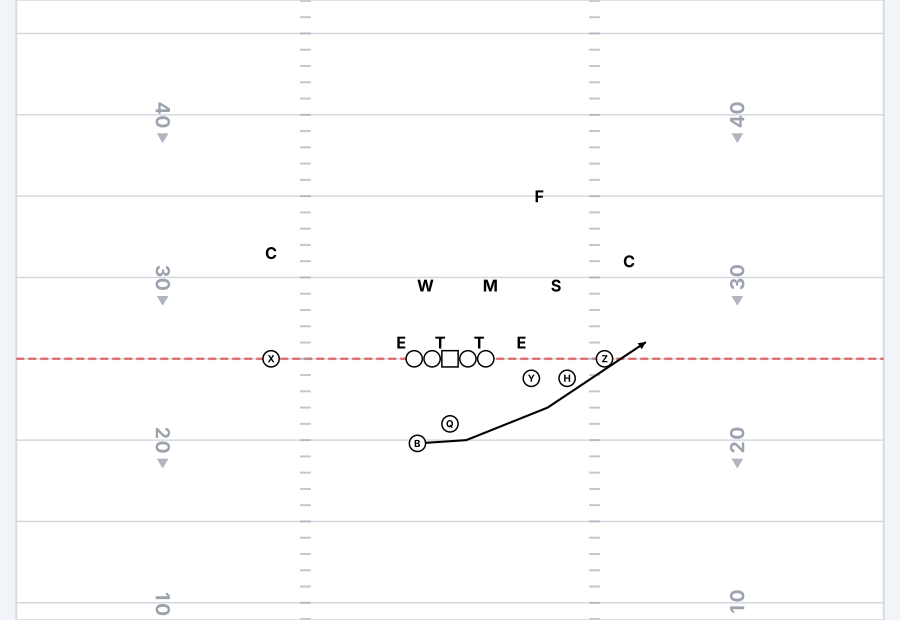
Look at where the second level is standing. Nobody had to be clever. They watched two quarters of film, saw that trips right produced a sweep and nothing else, and moved everyone a step and a half that direction before the ball was snapped. That is the whole scouting report.
It is not one formation, either. It compounds.
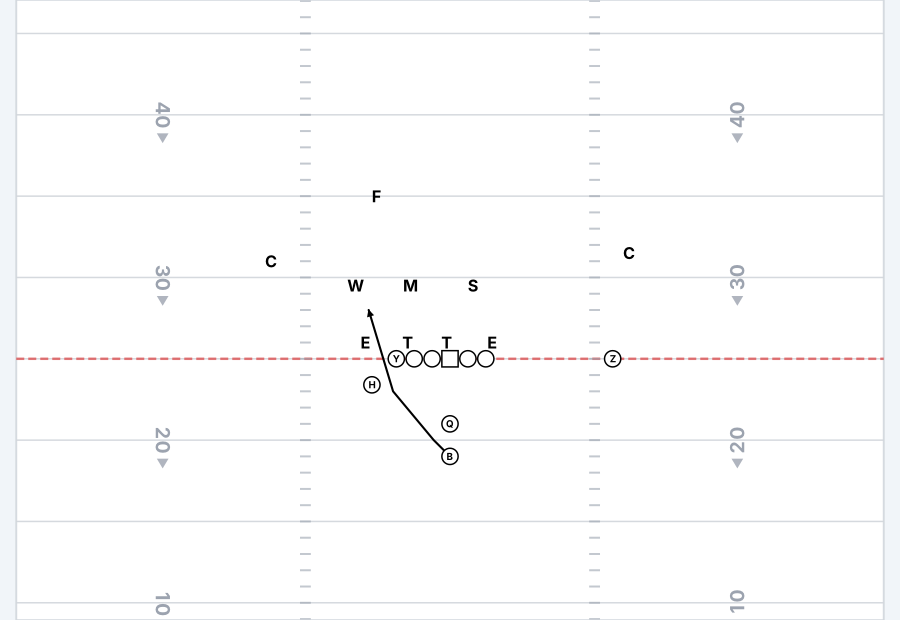
I have been on the wrong end of this. A few years back an opponent read a jet sweep off an overload formation, and the honest reaction at the time was the right one: they probably knew it. They did. We told them.
Why a borrowed system is not just borrowed plays
The reason to take someone else's offense is not that the plays are better. It is that a system is more than plays.
The nice thing about picking an existing system is that everything from installs to drills to plays fits together, versus you having to not only do a good job building a playbook but also decide how installs should go and what drills each individual group should run to learn the plays. In football there's never enough time to teach kids what you need them to learn.
That last sentence is the whole argument. Time is the constraint, not creativity. When you build your own, you are not writing one document. You are writing three: the plays, the install order, and the position drills that teach them. A real system hands you all three already fitted together, tested by someone who ran it for years.
In sixth grade we ran the Gun T system from Kenny Simpson. In seventh we ran the freshman offense from the high school our kids would feed into, on the theory that some of it would still be in their heads a year later. Neither was original. Both worked better than anything I would have drawn from scratch.
If you take one thing: whatever playbook you adopt or keep, make sure the plays include blocking assignments. A play without blocking rules is a picture, not a play.
What to do instead: one look, many plays
The fix is not more formations. It is fewer, with more coming out of each one.
Start from one formation. Run everything you have out of it. The defense gets no pre-snap information, so they have to defend all of it, every snap.
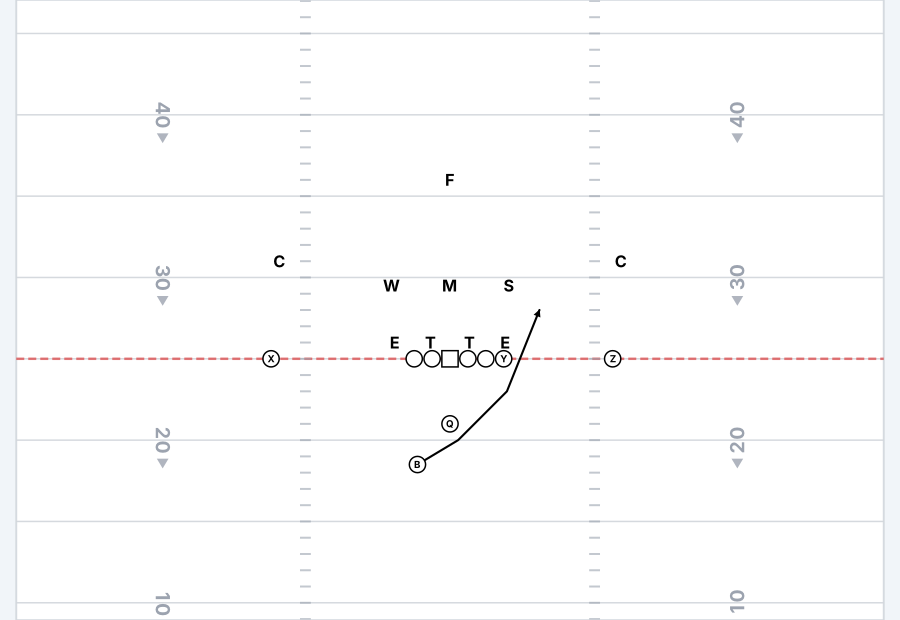
Same formation. Different play.
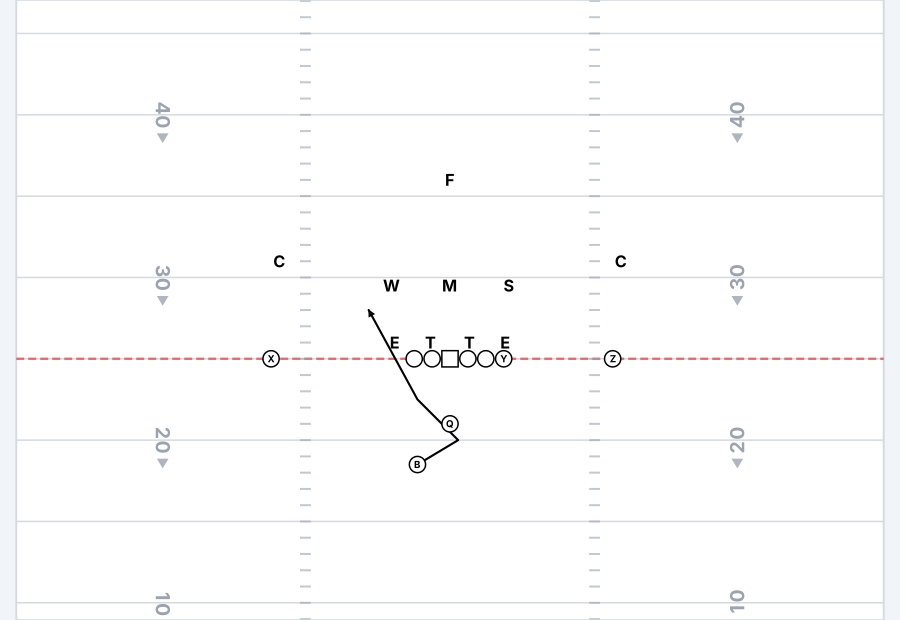
Notice the back's first step. It matches power exactly. A linebacker who has learned to trigger on that step is now wrong, and he is wrong because you made the two plays look the same on purpose.
Same formation again. Now it is a pass, off backfield action the front has already been punished for chasing twice.
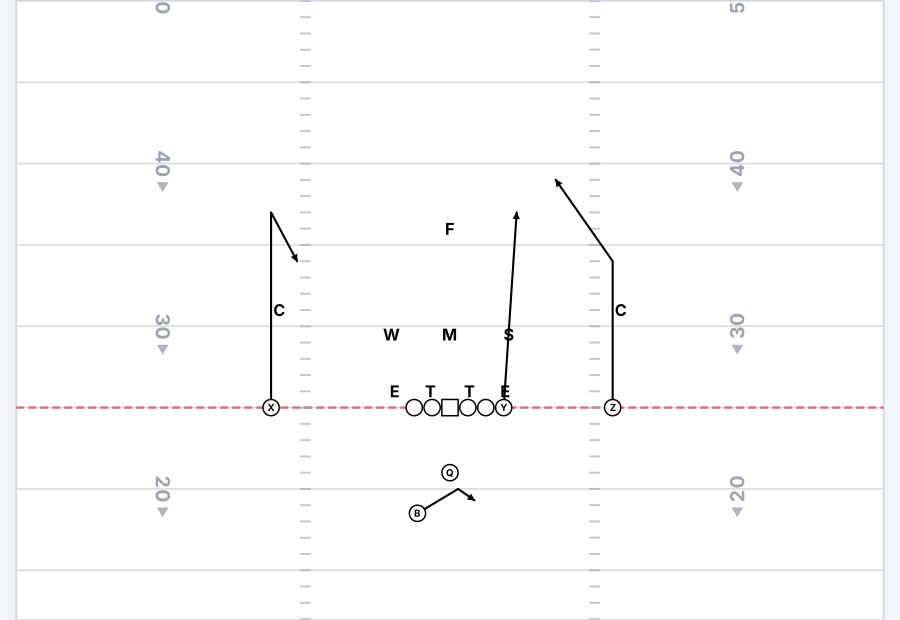
Three plays, one picture. Nothing to scout.
Getting different looks without adding formations
You still want the defense to have to adjust. You just do not want to buy that with a new formation every time. That is what tags are for.
You could start from one formation, use tags to move one or two skill position players around and get a lot of different looks out of it. Then you try to run all your plays out of the different looks. 6 to 12 plays out of many looks makes it hard enough to guess what you're doing. This is how most guys do it.
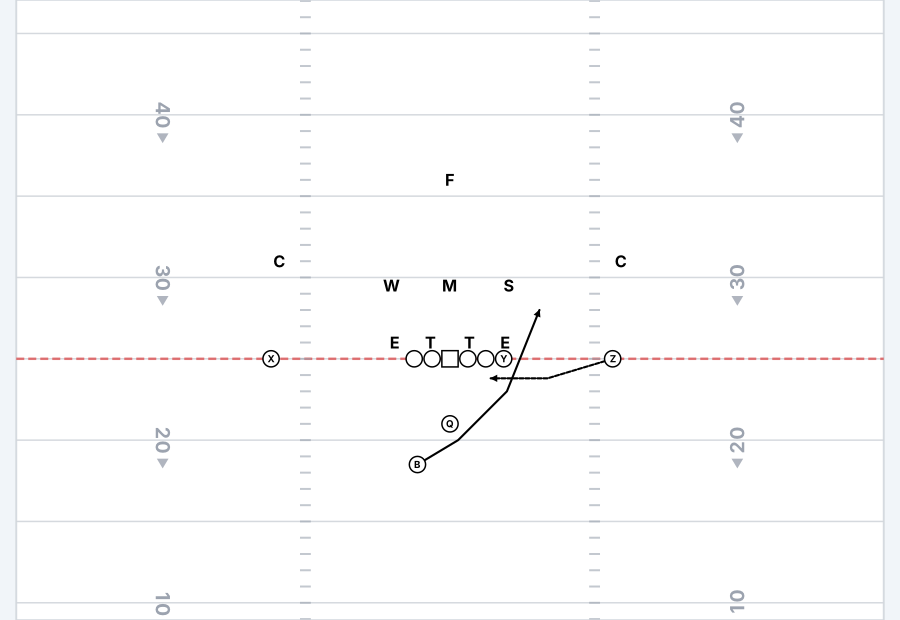
The formation did not change. One player did. The edge the play attacks moved, the defense has to re-fit, and you did not add a single new page to the playbook.
The teaching load is smaller than it sounds:
Different positions, mostly backs, learn to listen for different tags. Interior linemen mostly learn just the plays and then need to be taught run fits for the different defenses they see. If you have a smart quarterback he usually learns all the tags and gets kids in position prior to the snap if there's a kid who doesn't know where to line up. That way, having tags isn't much extra work, and you win by using fewer plays and fewer formations.
The uncomfortable version
Six plays run consistently well, with a little motion, will beat a well-drawn twenty-play install that nobody has repped enough. I have watched it happen from the wrong sideline.
The reason is not just execution. It is that the twenty-play install almost always came with twenty formations attached, and by week four somebody in the opposing coaches' box has written them all down.
Where to actually start
- Pick a system, not a play list. Something with an install order and position drills attached. It matters more that it is complete than that it is fashionable. How to Build a Football Playbook covers where to find one and how to install it.
- Cut to 6 to 12 plays. Keep the ones your kids can run, not the ones you like drawing.
- Get them all out of one or two formations. If a play only ever appears from one look, either fix that or accept that you are announcing it.
- Add tags before you add formations. A tag moves a player. A formation teaches the defense something.
- Check your blocking rules exist. For every play. Against the fronts you will actually see.
- Then go watch your own film and count. Sort your snaps by formation. If any formation produced exactly one play all season, the defense already knows.
That last step is the one most coaches skip. It is the only one that tells you the truth. Your opponents are doing it to you. You may as well do it first.