Creating Playbooks for Different Versions of Football
Here's what makes each type of football different, and what they look like in Playside Diagrams.
Football comes in many shapes and sizes. Canada has twelve players on each team on a bigger field with three downs. Small schools have eight players on each team on a narrower field. Flag football has no tackling, no blocking, and a zone where you are not allowed to run. Each style of play looks different in the playbook.
Luckily, Playside Diagrams has options for each style of play. This guide walks through 11-man American football, Canadian football, 8-man football, 5v5 flag, and 7v7 flag, pointing you to the right Diagrams page for each of them.
The Standard: American Football (11-man)
In 11-man American football, the field is 100 yards long and 53 and a third wide, with 10-yard end zones. You get four downs to make 10 yards. Seven players have to be on the line, one back can be in motion, and he cannot be moving toward the line at the snap. The neutral zone is the length of the ball.
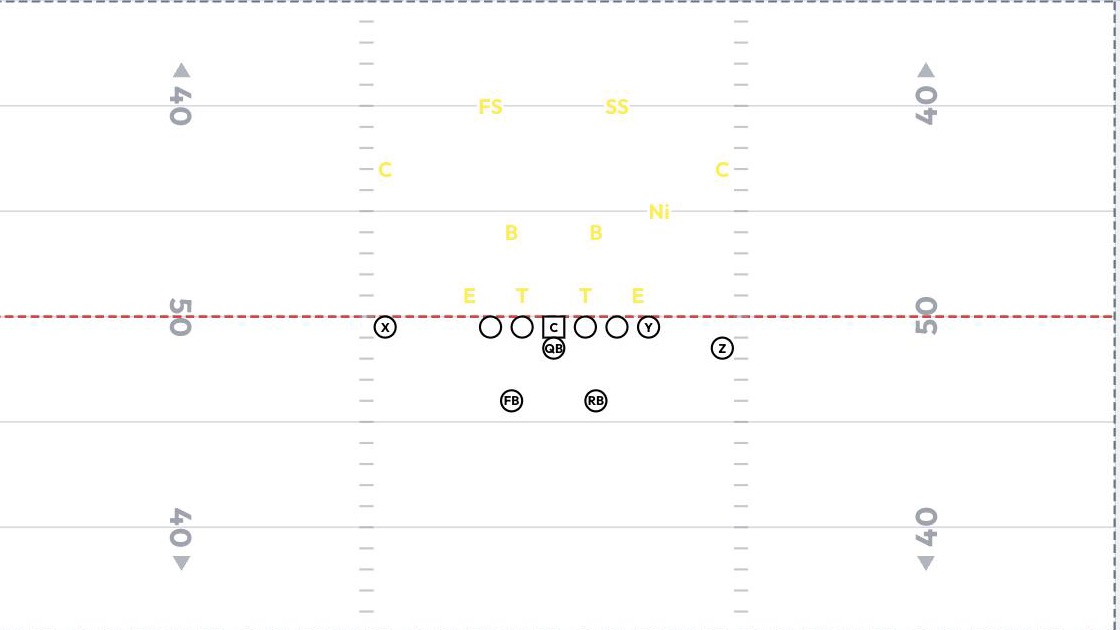
That's what a new play looks like on Diagrams. Here's what's different across the other styles of play:
| 11-man | Canadian 12 | 8-man | Flag 5v5 | Flag 7v7 | |
|---|---|---|---|---|---|
| Players a side | 11 | 12 | 8 | 5 | 7 |
| Field | 100 x 53⅓ | 110 x 65 | 80 or 100 x 40 | 70 x 30 | 80 x 40 |
| End zones | 10 | 20 | 10 | 10 | 10 |
| Downs | 4 for 10 | 3 for 10 | 4 for 10 | 4 to midfield, then 3 to score | varies by league |
| Blocking | yes | yes | yes | none | none |
| Tackling | yes | yes | yes | flag pull | flag pull |
Draw your first play free at diagrams.playside.co.
Canadian Football (12-man)
Canada's field is 110 yards between the goal lines and 65 yards wide, with end zones 20 yards deep. Each team has twelve players on the field, instead of eleven. Canadian football has a unique position, called a slotback, which is a hybrid role that blends receiving and running. There are usually three slotbacks on the field at once.
Another interesting nuance is three downs instead of four, which fundamentally changes the dynamic of the game. With one fewer play to make 10 yards, second down is already a passing down. Coaches throw more, kick more, and run less on short yardage.
That's not all; there are even more nuances to the game. The two lines of scrimmage are a full yard apart, not the length of the ball. Every back except the quarterback can be in motion before the snap, and they can run toward the line. So a Canadian play can have four or five players moving at once, and your diagram needs the motion arrows to show it.
Kicks can score a single point, called a rouge, if the receiving team does not get the ball out of the end zone. There is no fair catch; instead, the kicking team has to stay five yards off the returner until he touches the ball. And the goal posts stand on the goal line, not the end line.
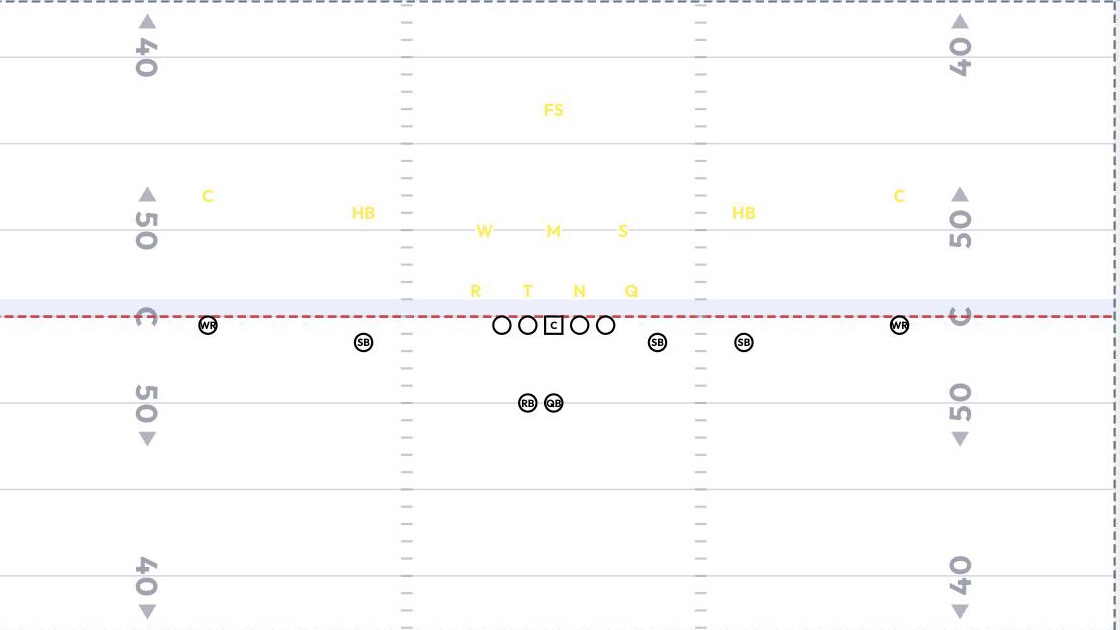
In Diagrams, pick Canadian 12 when you start a play. The field preset is Canadian, the roster has twelve on each side, and the starter formations are Ace 3x2 and Pro 2-Back. Coaches in Canada see Canadian 12 picked for them when they create a team.
Draw your first Canadian play free at diagrams.playside.co/canadian-football.
8-man Football
8-man football is what small schools play when they cannot field eleven. The rules are 11-man rules with a few changes. The field is 40 yards wide, 13 and a third narrower than a full field. Most leagues keep it 100 yards long; some, like Nebraska's, play 80.
On offense, the three missing players are usually the two tackles and one skill player. Five players have to be on the line instead of seven, which means a center, two guards and two ends. The ends and the backs are eligible receivers no matter what number they wear, so jersey numbers do not decide who can catch a pass the way they do in 11-man.
On defense you lose a lineman, a linebacker and a defensive back, so fronts like the 3-3-2 and the 4-2-2 replace the 4-3 and the 4-2-5. With a narrow field and fewer defenders, the game is fast and the scores are high.
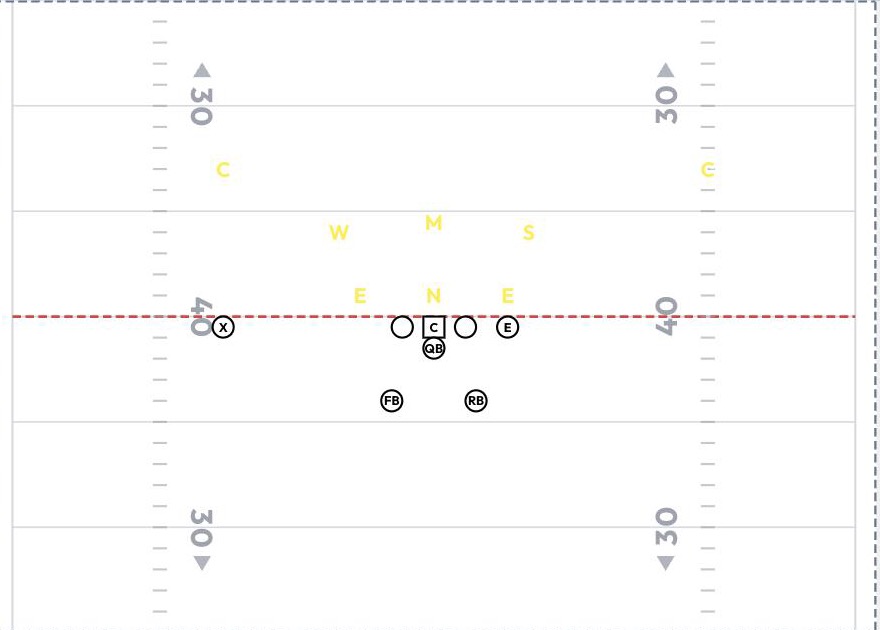
Pick 8-man in Diagrams and the field becomes 80 by 40 (100 by 40 is a setting), the roster is eight a side, and the starter formations are Pro Set, Twins, Split Ends, Wing and I-Form against a 3-3-2 or a 4-2-2.
Draw your first 8-man play free at diagrams.playside.co/8-man-football.
5v5 Flag Football
5v5 flag is the NFL's designated flag game and the one most youth leagues play. The field is 70 yards by 30, with 10-yard end zones and a line to gain at midfield. The offense gets four downs to cross midfield and then three to score.
There is no blocking or screening at any time. The quarterback cannot run with the ball, and has seven seconds to throw it. And in the five yards before midfield and the five yards before the goal line, called the no-run zones, all plays have to be passes, even after a handoff.
On defense, the rusher has to start seven yards off the line of scrimmage, and any number of players can rush. A play ends when a defender pulls the ball carrier's flag, and the ball is spotted where the flag came off. No tackling, no laterals, no diving to avoid a pull.
So a flag play is all about spacing and timing. Nobody blocks for a run, so formations are all the more crucial, with routes timed to beat a seven-second clock.
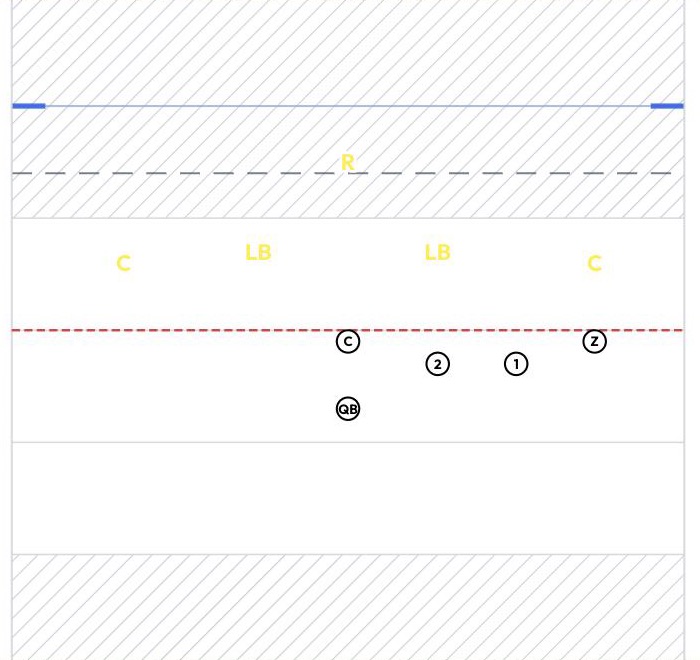
Pick Flag 5v5 in Diagrams and the field is 70 by 30 with the no-run zones hatched. New plays start at your own 15, which keeps the line of scrimmage out of the zone.
Draw your first flag play free at diagrams.playside.co/flag-football.
7v7 Flag Football
7v7 flag is the version most high schools play, and most of those teams are girls' teams. Twenty states ran a state championship in girls' flag in 2025-26, and the NFHS published its first national flag rulebook for the seven-player game. The recommended field is 80 yards by 40 with 10-yard end zones, and the lines to gain sit every 20 yards.
Two more players a side means a center who can release, extra receivers, and a defense that can rush and still cover five. Rules on the rush, the no-run zone and the pass clock vary by state and league, so check your own book.
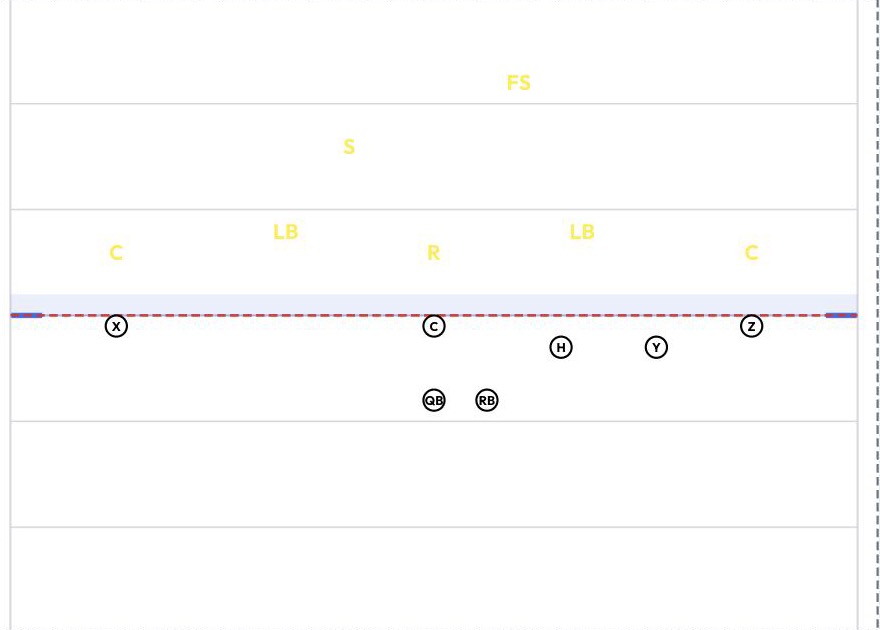
Pick Flag 7v7 in Diagrams for an 80 by 40 field, or switch to Full for a 100-yard one. Seven a side, with Trips, Doubles, Bunch and Empty to start.
Draw your first 7v7 play free at diagrams.playside.co/flag-football.
What Doesn't Change in Diagrams
Whichever game you pick, the rest of Diagrams works the same way. Save your own formations under your own names. Write each position's job beside the play. It prints with the playbook. Build a call sheet and a wristband from the same plays. Export the playbook to PDF or PowerPoint. And if you have film in Playside, each play has a Film button, so your diagrams connect to the live reps.
One account covers all of it. If you coach a 5v5 team in the fall and a Canadian team in the spring, the plays live side by side.