Covered and Uncovered
also: covered · uncovered · covered lineman · uncovered lineman
Whether a defensive player is aligned over an offensive lineman. In a rule-based scheme, offensive linemen check this before the snap to determine their blocking assignment.
Covered, a Man on You
A lineman is covered when a down defender is aligned on him, head up or on either shoulder. In almost every rule-based blocking scheme that is the first branch in his rule. It resolves to the simplest assignment in football: the defender aligned on you is yours, and you block him.
The reason it is the first question rather than a detail is that it is the one thing a lineman can settle on his own, before the snap, without knowing the coverage, the front's name, or what anybody else is doing.
base blockUncovered, Nobody on You
A lineman is uncovered when nobody is aligned on him. He is not free: the scheme sends him somewhere, normally to help the covered lineman next to him on a combo, straight up to a linebacker, or pulling into space. In perimeter schemes like Pin and Pull, being uncovered is the exact trigger that tells a lineman to pull into the alley, while his covered neighbor down-blocks to seal the interior.
An uncovered lineman is also the offense's cheapest source of an extra body, which is why defenses care about where the uncovered offensive linemen are. A front that leaves two interior linemen uncovered has handed the offense two players to send at the second level.
climbCovered vs Uncovered Identification
Before the snap, every offensive lineman checks whether a down defender aligns on his body or either shoulder. Linemen with a defender on their landmark are covered; linemen with no down defender aligned on them are uncovered and can double-team, pull, or climb to the second level.
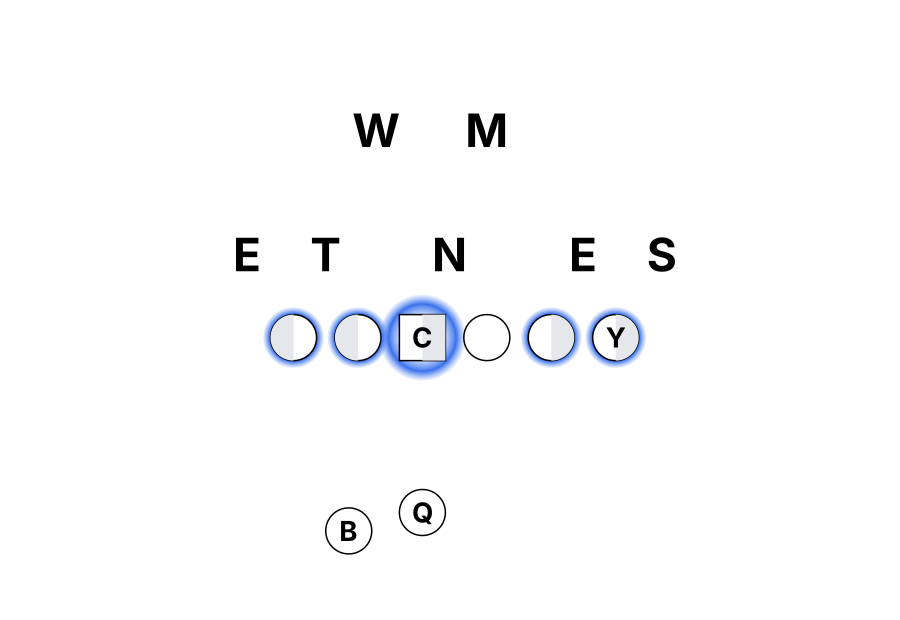
6-Man Line (Covered Highlighted)
Highlighted view: Five offensive linemen (LT, LG, C, RT, Y) are covered (blue rings). The right guard is uncovered, leaving him free to execute combo blocks or climb to the second level.
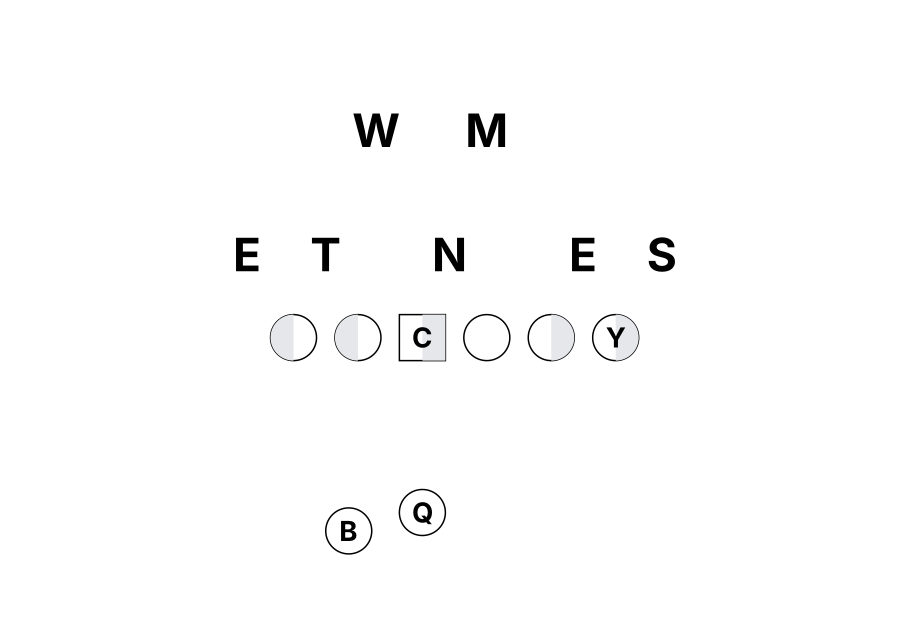
6-Man Line (Base)
Base alignment: Shading on each offensive lineman's circle shows where a defender aligns relative to his body. RG has no shade and is uncovered.
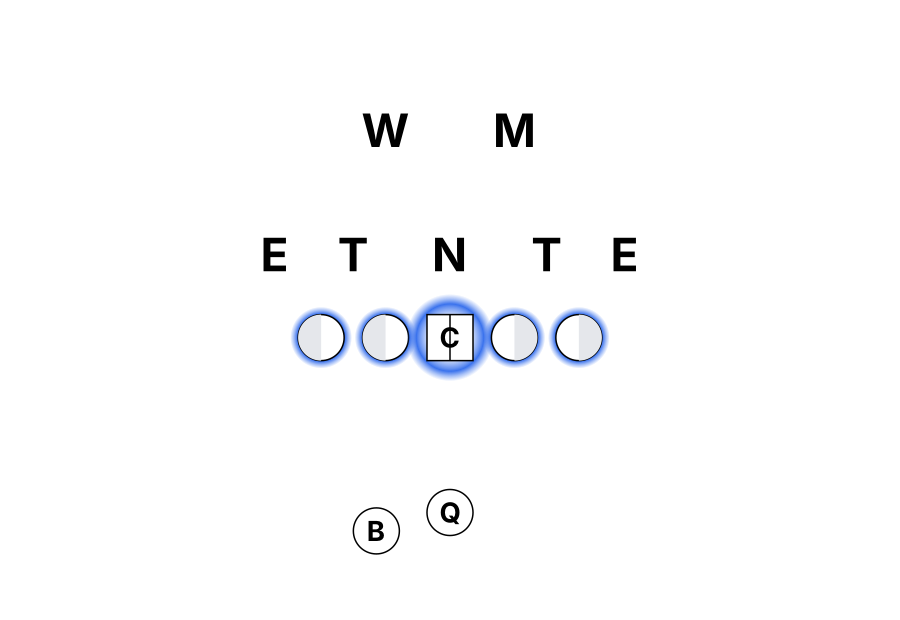
5-Man Line (All Covered)
Highlighted view: Against a five-man rush with no tight end, all five linemen are covered (blue rings). With no uncovered lineman, the offense has no free blocker to combo or climb cleanly.
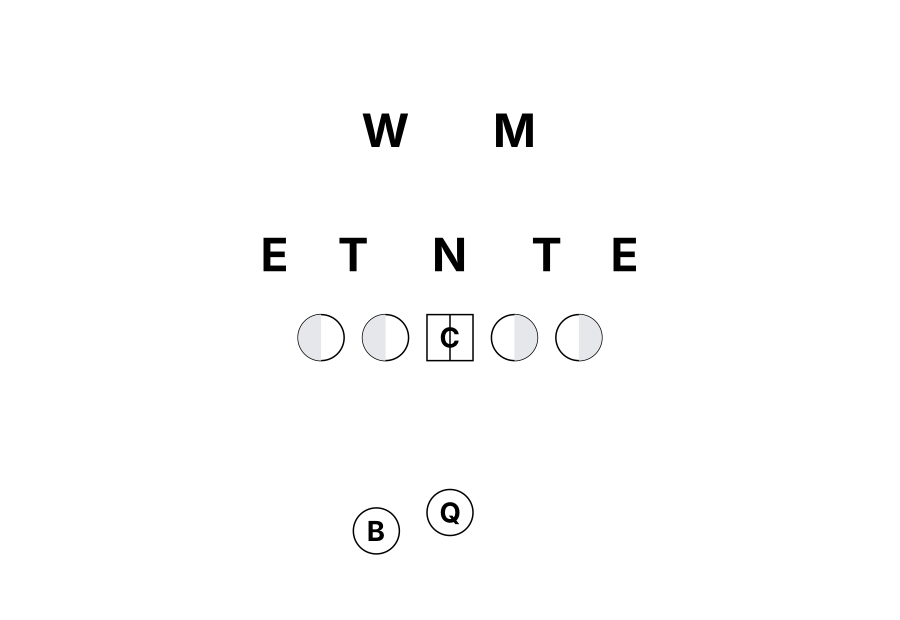
5-Man Line (Base)
Base alignment: Shading on the five-man line shows every gap and blocker accounted for by a first-level defender.
- Blocking Rules
- Pre-snap assignment rules that tell linemen who to block off their covered/uncovered status.
- Inside Zone
- Core run scheme pairing covered linemen on down defenders with uncovered linemen on combo climbs.
- Outside Zone
- Perimeter scheme using synchronized reach steps where covered blockers hook down defenders while uncovered blockers overtake or climb.
- Pin and Pull
- Perimeter scheme where covered linemen pin inside and uncovered linemen pull into the alley.
A note on how the term is used
Covered and uncovered describe ALIGNMENT and not intent. A lineman can be uncovered and still end up blocking a defensive lineman who slanted into him, and that is a scheme problem rather than a mislabel.
Where you will hear it
- zone and rule-based blocking systems