gap

Offense

also: A gap · B gap · C gap · D gap · gap letters

The space between two offensive linemen, lettered outward from the center. The offense names this ground with letters and the defense names the same ground with numbers.

Offense

gap, the space

The space between two adjacent offensive linemen, lettered outward from the ball: A between center and guard, B between guard and tackle, C between tackle and tight end, D outside that. Each side of the ball has its own A gap, so a coach saying backside B means one specific piece of ground. Run plays are called to a gap and defenders are assigned one, which makes this the shared coordinate system that run-game conversation depends on.

Also calledA gap, B gap, C gap, D gap
Not to be confused withgap scheme, technique numbers

See it in a play

  • Trapinside run, backside guard pulls to trap the first man past the holeWing-T
  • Buck sweepoutside run to the wing, both guards pullingWing-T

Reference

Gaps are the spaces between linemen, lettered outward. Both sides of the ball use them.
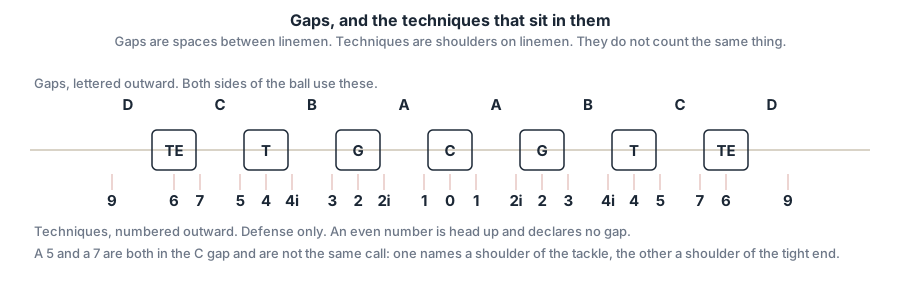
A line of scrimmage with the offensive linemen drawn as boxes. Gap letters A, B, C and D sit above the line in the spaces between linemen, mirrored on both sides. Defensive technique numbers sit below the line on the shoulders they name, reading 9, 6, 7, then 5, 4, 4i, then 3, 2, 2i, then 1, 0, 1 from the outside in. A 5 and a 7 sit either side of the C gap.
GapBetweenNote
Acenter and guard
Bguard and tackle
Ctackle and tight end
Doutside the tight endOutside the last man on the line. Exists only when there is a tight end to be outside of, which is why some staffs stop at C.

A note on how the term is used

Three systems describe this ground and only one of them is shared, which is why a room with an offensive and a defensive coach in it can be talking past each other about a single strip of grass.

GAPS are spaces between linemen, lettered A, B, C, D outward. Used by both sides.

TECHNIQUE NUMBERS are shoulders ON linemen, numbered 0 to 9. Defense only. A three technique stands in the B gap, so the two systems describe nearly the same place and are not the same statement: one names where you are, the other names who you are on.

HOLE NUMBERS are points of attack inside an offensive play call, and they are the oldest of the three. Offense only, and increasingly replaced by gap letters even on offense, which is why a coach who learned football in the nineties and one who learned it recently can both be fluent and unable to follow each other.

Where you will hear it

  • universal

By level

Gaps are taught early and to players. A youth defender is told which gap he has. It is one of the first pieces of vocabulary he gets, because a run fit cannot be explained without it.

Whether technique numbers are taught at that level at all is a separate question and an open one. They may be closer to staff vocabulary, a way coaches describe alignment to each other when planning, than something a player is ever asked to know. That would explain why the two systems can sit on the same strip of grass for years without anyone noticing they count different things: a player learns gaps, and techniques are what the adults say in the meeting room. Stated as a possibility rather than a fact, because it has not been sourced.