Make the Offseason a Competition
The season gives you a scoreboard every week. The offseason does not. In between the final game of last season and the first practice of next season, you have to get your players lifting, running and showing up. It's on you to keep score.
Two coaches in our 1st and 10 series solved this the same way without knowing it. Steve Smith coaches at St. Brendan in Miami. Garrett Lucas coaches at Rancocas Valley in New Jersey. Both of them split the roster into teams and make the offseason a contest.
Three more coaches from the series gave tips on the offseason too. John Emel, the head coach at West Deptford in New Jersey, on how much rides on the offseason. Tom Elder, the defensive coordinator at Chaminade on Long Island, on why players want hard work. Rocco Del Priore, the head coach at Monsignor Farrell on Staten Island, on why competing matters after football.
Here's what each coach had to say and how it can help you set up your own offseason plan.
Steve Smith: Put Them in Groups and Keep Score
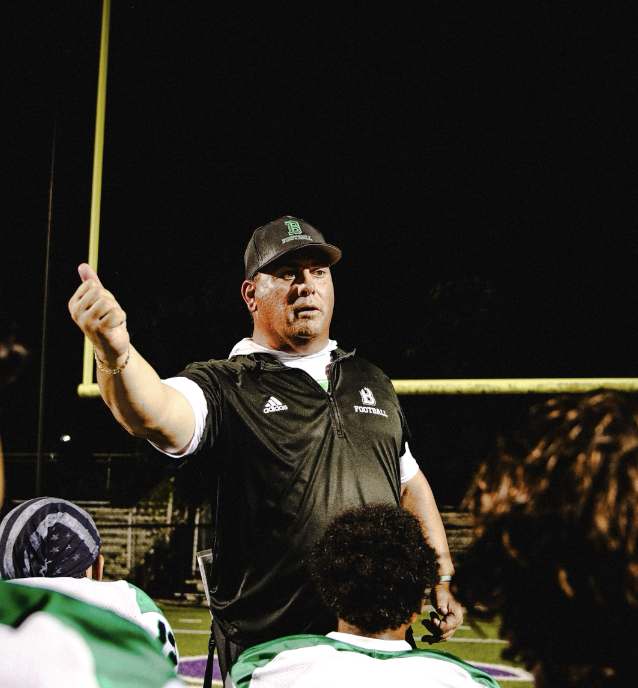 Steve Smith addresses his players on the field after a night game.
Smith starts in the weight room. "In the off-season, when we're doing our lifting, I put them into groups and have them compete against each other for points."
He keeps two scores going at once: "Who's the winner for the week, and what team wins at the end of the off-season. Then we take the winners out for a dinner or something like that."
The point, in his words: "So you're building a competitiveness where they want to compete against one another."
He pairs the competition with something lighter. "Every year before the season, we always do some type of little talent show, something fun."
His reason is that a roster is a group of kids from "different families, different backgrounds, different beliefs." They need more than a weight room in common. "I also think you have to do things with them."
Garrett Lucas: Believe, Compete, Win
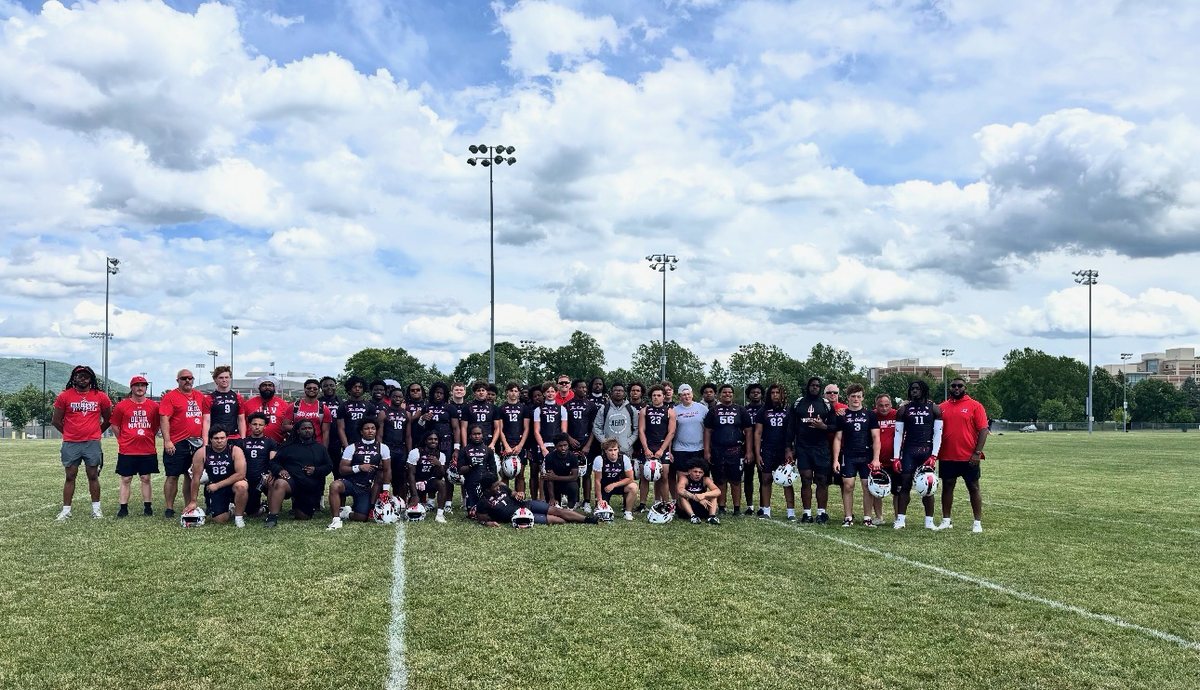 Garrett Lucas's Rancocas Valley team and coaches.
Lucas builds his whole program on three words: believe, compete, win. He treats them as steps, and the first step happens in the weight room. "When you lift and you become physically fitter and physically stronger, you naturally have a self-confidence about yourself."
Then comes the second step. "That belief leads you to compete. We compete in the weight room, we compete at practice, everything."
His structure is the same as Smith's. "We set up so many different competitions. At the end of the week in the offseason, we put them in teams and compete." He puts his competitions at the end of the week, so the week builds toward something.
Lucas does not want players who feel they have to be there. "You make it competitive, and you give your players a purpose every single day." He wants to instill a mindset in his players where they think, "I get to go to a Rancocas Valley football practice."
Without the first two steps, you can't have the third. "You've got to believe in yourself, you've got to be competitive, and if you fall in love with the process of that, the winning will come."
John Emel: Get the Most Out of the Time You Have
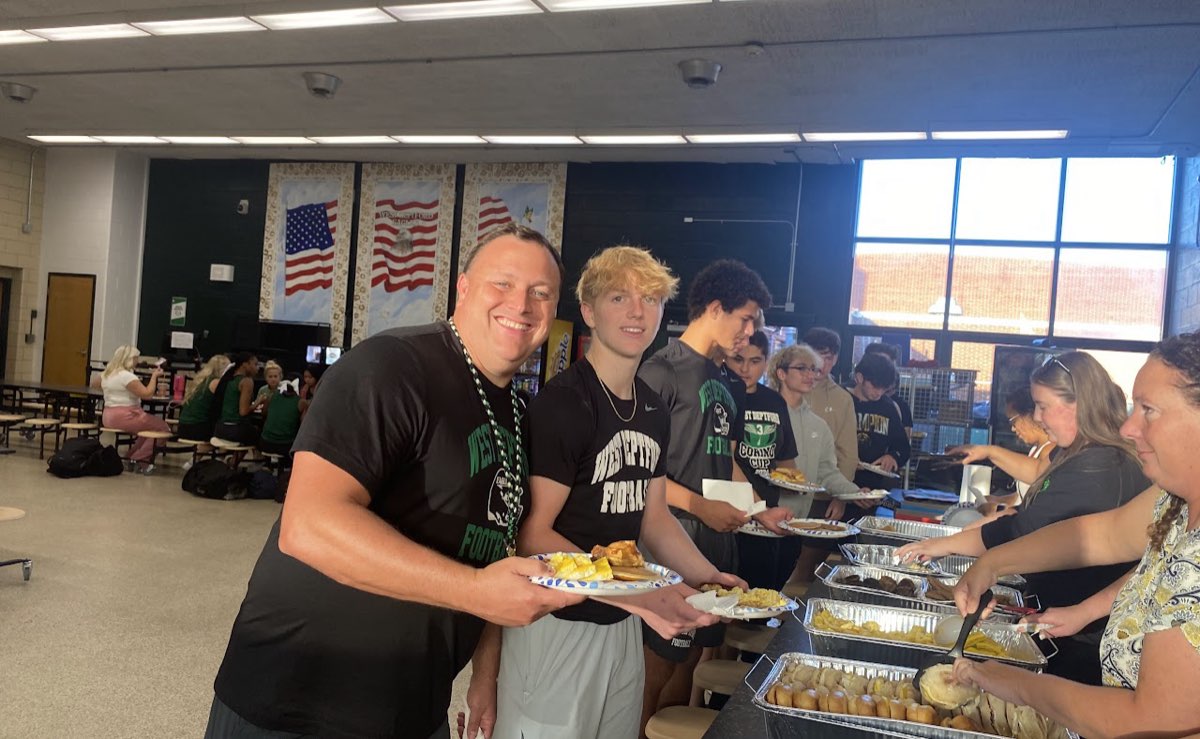 John Emel serves the team dinner.
Emel says plainly what the offseason decides: "A lot of the success you will or won't have is a direct reflection of what you do in the offseason."
He is just as careful about what you ask of players once they leave the building. "Don't overwhelm them with obligations or expectations outside of when they're here," he said. "Get the most out of the time you're together, and realize that when they leave here, they have other things going on."
Tom Elder: Players Appreciate Doing Hard Things
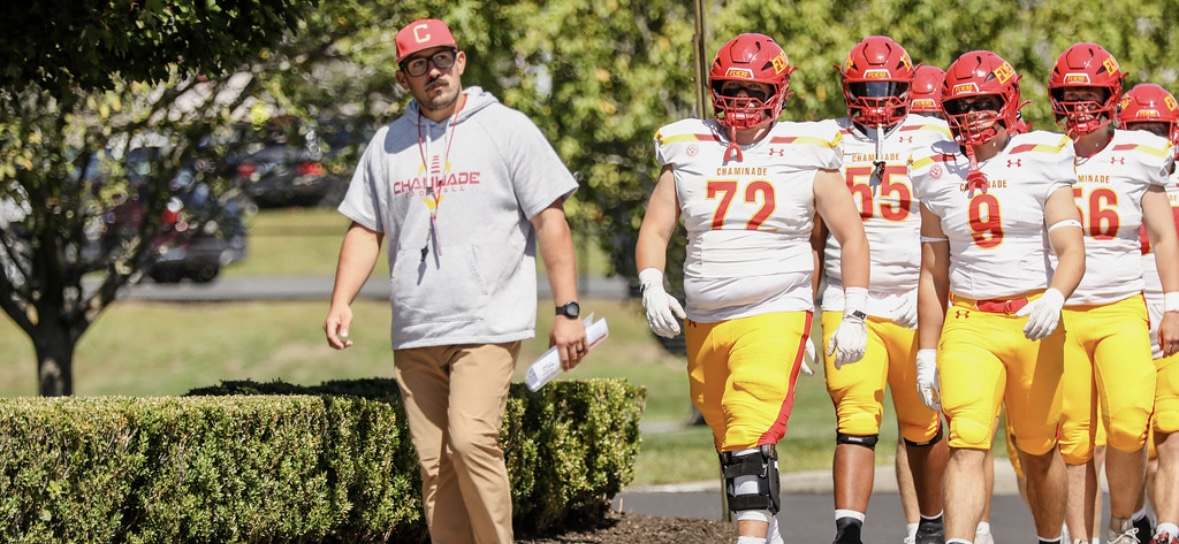 Tom Elder walks to the field with Chaminade players before a game.
Elder explains why hard work done together sticks.
"Guys appreciate shared experience. Guys want discipline, even if they don't always recognize that. And they appreciate doing hard things."
Rocco Del Priore: The World Is Full of Competition
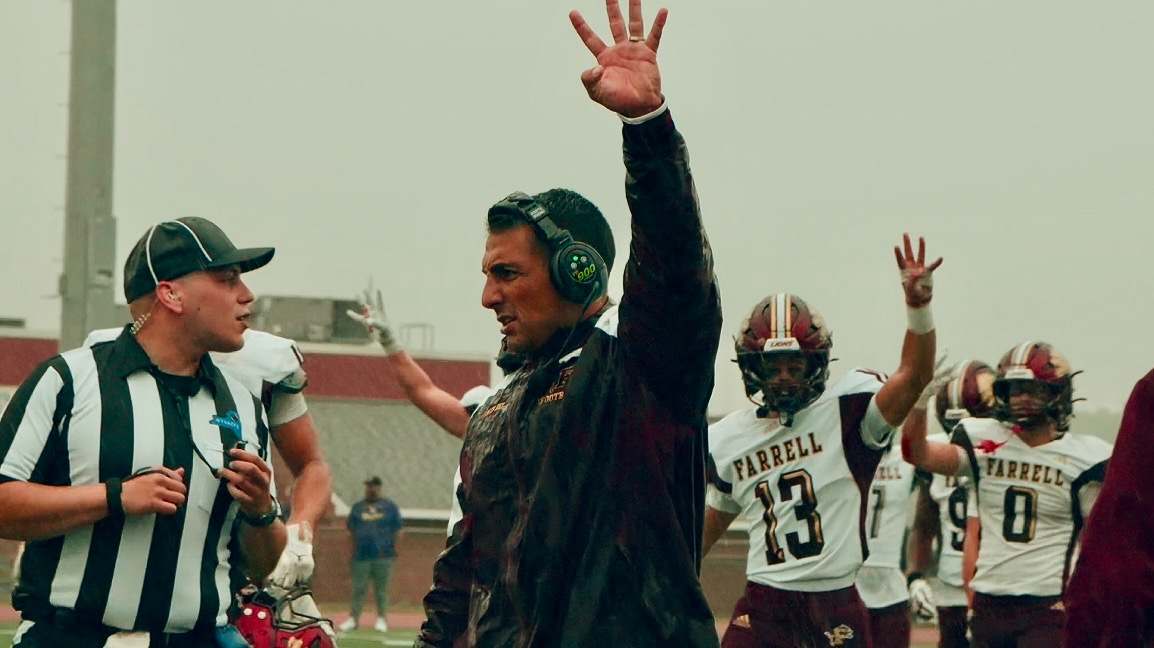 Rocco Del Priore signals from the sideline during a game.
Del Priore says what all of it is for. He wants his players to leave as young men who "aren't afraid of competition, because the world is full of competition."
Set Up Your Own
Neither Smith nor Lucas said exactly what earns points, so this part is our suggestion, not theirs.
Use teams, not rankings. A ranking has one winner and a long list of players who stop looking at it. A team gives your third-string guard a reason to show up, because four other players are counting on his points.
Name a winner every week, and one at the end. The weekly winner keeps it fresh. A team that falls behind in January can still win the second week of February. The season-long total keeps it honest. One good week does not carry you.
Score what every player can win. If you score only who lifts the most, the same few players win every week and the rest stop caring. Score things any player can win:
- Showing up.
- Finishing the work.
- Beating his own numbers from last month.
That fits what the coaches are after. Lucas wants each player to believe in himself, and a player who beats his own number has proof. Emel wants to find "guys who are willing to do the work," and a points sheet that rewards showing up tells you who they are by spring.
Keep it inside the time you have. A competition should not become a second job for your players. Run the contest inside your scheduled sessions. Score what happens in the room. Do not turn it into homework.
A contest gives the hard thing a shape. Players are no longer just lifting. They are lifting for their team's Friday total. The standings come down when the season starts. What stays is a roster that is used to competing.
1st and 10 is a Playside interview series. Every coach gets the same 10 questions. Read all of them on The Sideline.