Advice for Your First Coaching Job
Every coach in our 1st and 10 series gets the same ten questions. The last one never changes: what advice would you give a coach who just landed their first coaching job?
Ten coaches have answered it so far. They coach in Miami, in New Jersey, on Long Island and on Staten Island. Some run high school programs. Some train one position for a living. Nobody gave the same answer.
Here they are, one coach at a time, in their words.
John Emel: The Job Was Open for a Reason
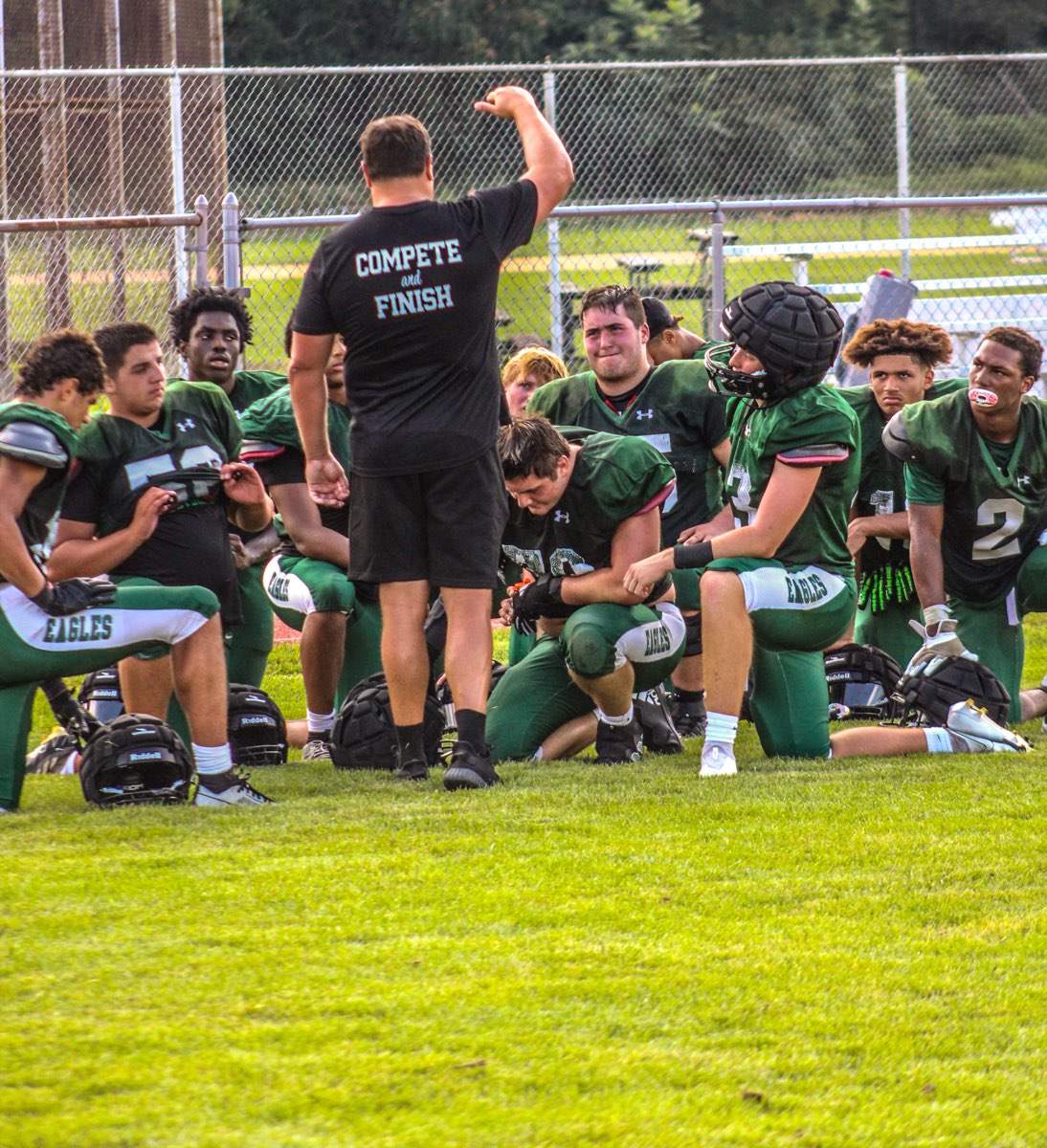 John Emel addresses the West Deptford Eagles at practice.
John Emel has been a head coach at two South Jersey schools. He starts with why your job existed in the first place.
"Most coaches don't leave when things are on top," he said. For the most part, "the job was open for a reason, so you're going to have to go in there and go to work."
He also tells you where the work happens. "A lot of the success you will or won't have is a direct reflection of what you do in the offseason. It might take a couple of years."
Then find the hard workers, and put them on the field. "You have to develop guys and find guys who are willing to do the work, and play those guys, because the work ethic they're developing is what's going to make you successful, not just the superstars or the guys it comes easy to."
He saved the hardest part for the end of his answer, and he was blunt about it. "A lot of young coaches blame other people. My players aren't good enough, my coaches aren't good enough, we didn't do a good enough job. Okay, we didn't do a good enough job, but as the head coach, it's all on you."
That holds even when the mistake was not yours. "You've got to be the man who takes the blame."
Steve Smith: Ask Questions, Then Coach Your Style
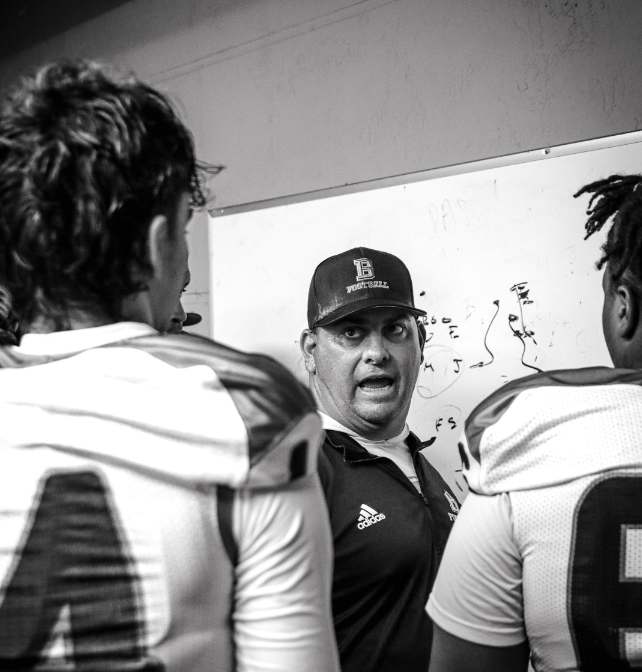 Steve Smith talks through plays at the whiteboard with two players.
Steve Smith is 35 years into coaching. He put the first part in one line: "My best advice: don't be afraid to work."
The second part: "Always learn, and always ask questions."
He did it himself. As an assistant at FIU he worked with an offensive coordinator who had coached at Georgia, won a national championship at Marshall and coached in the pros. Smith kept asking him things. Can you do this? What do you think about doing something like this? "Just always ideas, and always writing those things down."
Learning from other coaches does not mean copying them. "You've got to coach your style. You can't be someone else. You have to be you, because you can't fake it. The kids will see right through that."
He finished by telling new coaches to plan the career they want: "If you want to be a head coach, develop your philosophy on how you want to do things and what you want to do."
Derrick Gibson: Expect a Roller Coaster
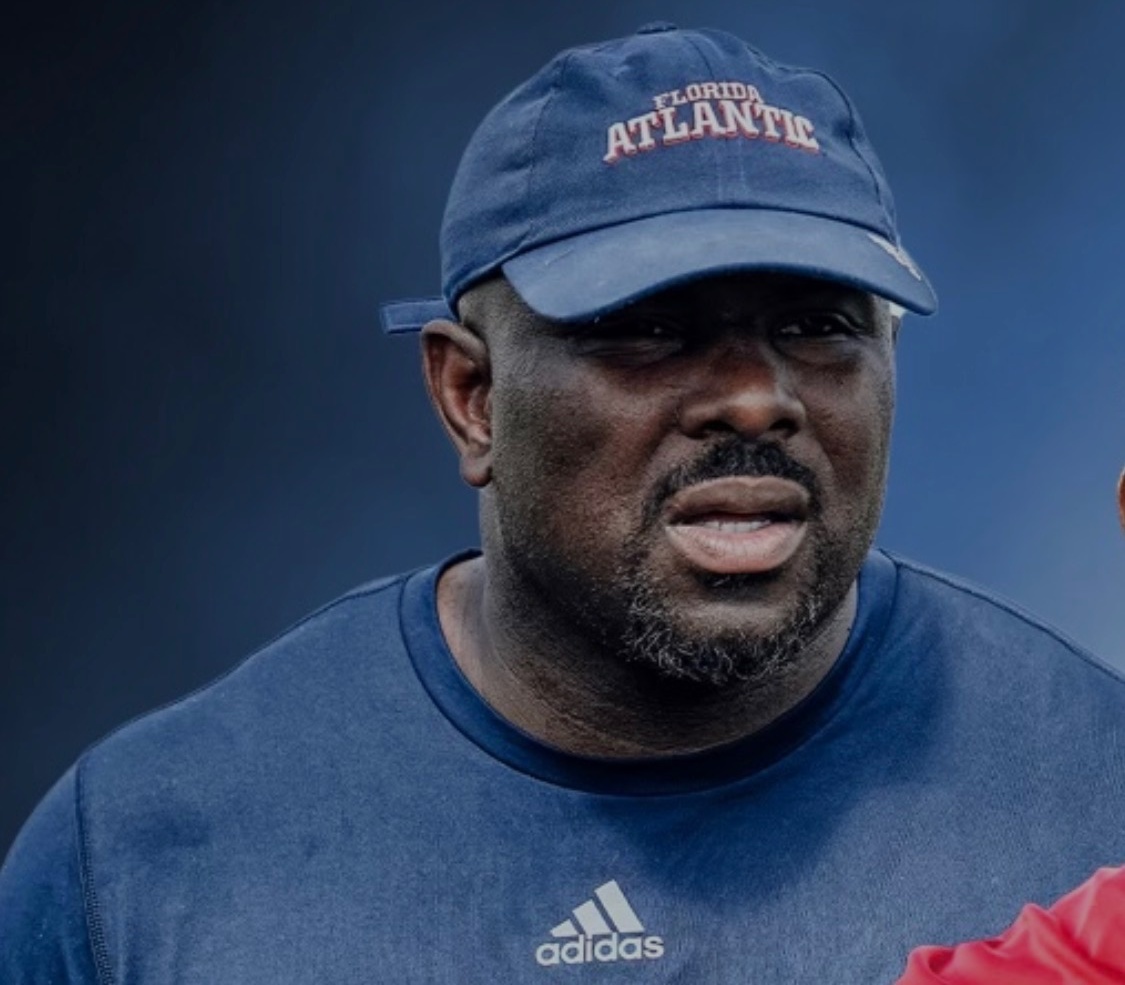 Derrick Gibson, the head coach at Miami Central, in a Florida Atlantic cap.
Derrick Gibson is the head coach at Miami Central. His answer is about what the first year feels like.
"It's going to be a roller coaster, ups and downs. But if you keep a positive attitude every day, you should come out successful."
Jerry Seymour: Research, Research, Research
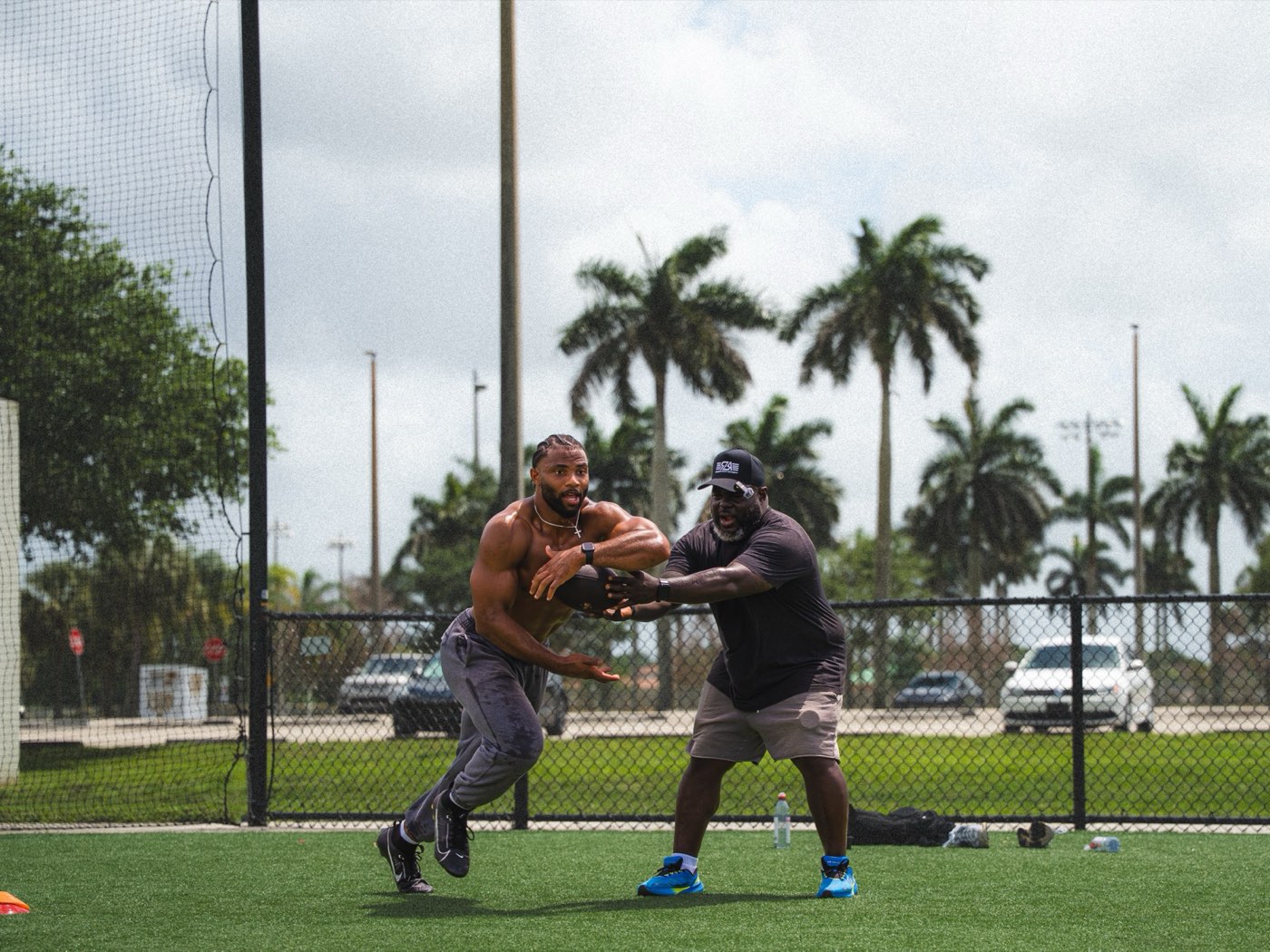 Jerry Seymour, founder of The RunningBack Academy, works one-on-one with an athlete.
Jerry Seymour founded The RunningBack Academy. His advice is to do your homework before you walk in.
"Research your players. Research the concepts. If you're an assistant coach, what systems are they running?"
He means people too. Know something about the coaches and players you are joining. If a player is from a place you have a connection to, you have something to talk about on day one.
Tom Elder: Know Every Player's Name
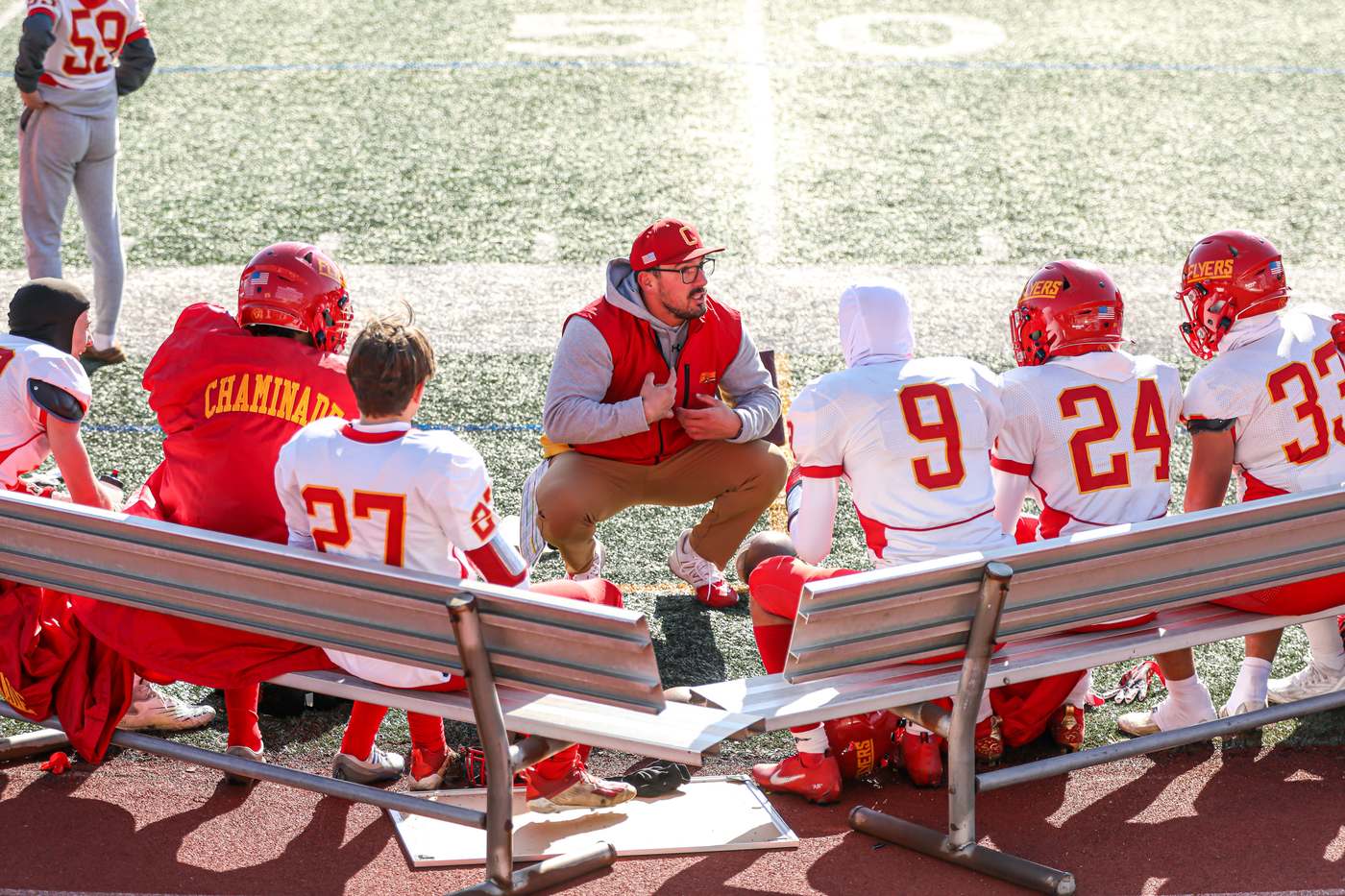 Tom Elder talks with Chaminade players in front of the bench.
Tom Elder is the associate head coach and defensive coordinator at Chaminade on Long Island, a school that draws players from 150 towns.
"Knowing their names is the non-negotiable of non-negotiables. There can never be a kid in that program whose name you don't know, where you don't know something about his family, where he's from, what makes him tick."
He also gives the assistant a test to run on himself. "Be the head coach of whatever your responsibility is." Then: "Think about what you would want your assistants to do if you were the head coach of the program."
And the short version: "No job is too small."
Torrian Wilson: Stay True to Who You Are
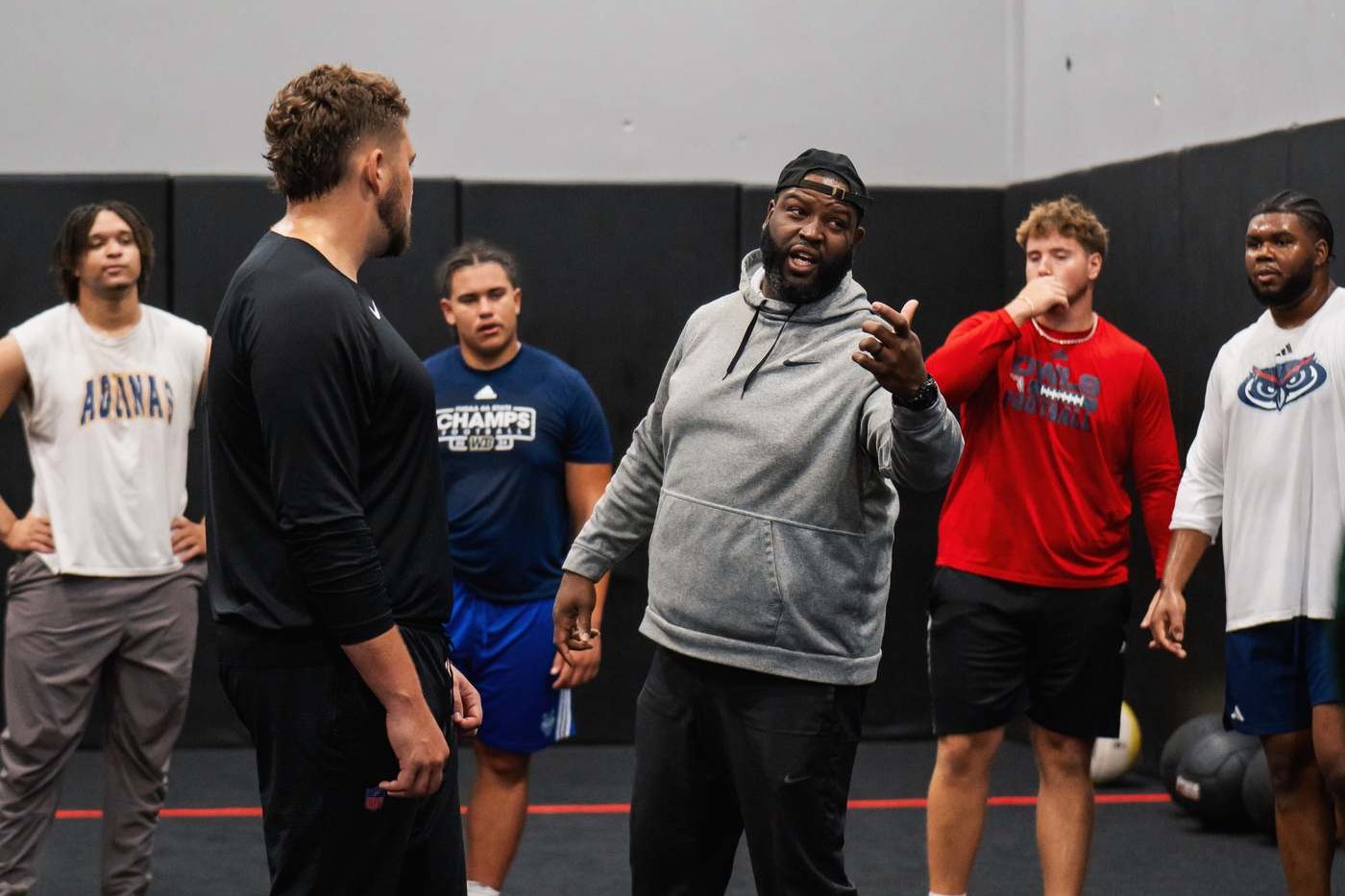 Torrian Wilson coaches a group of linemen at Crafting Linemen.
Torrian Wilson played offensive tackle at UCF and now trains linemen. His advice is about who shows up to practice.
"Stay true to who you are. So many times guys go into it trying to be something they're not."
Wilson finished his answer with "never stop learning."
Garrett Lucas: Be a Man of Your Word
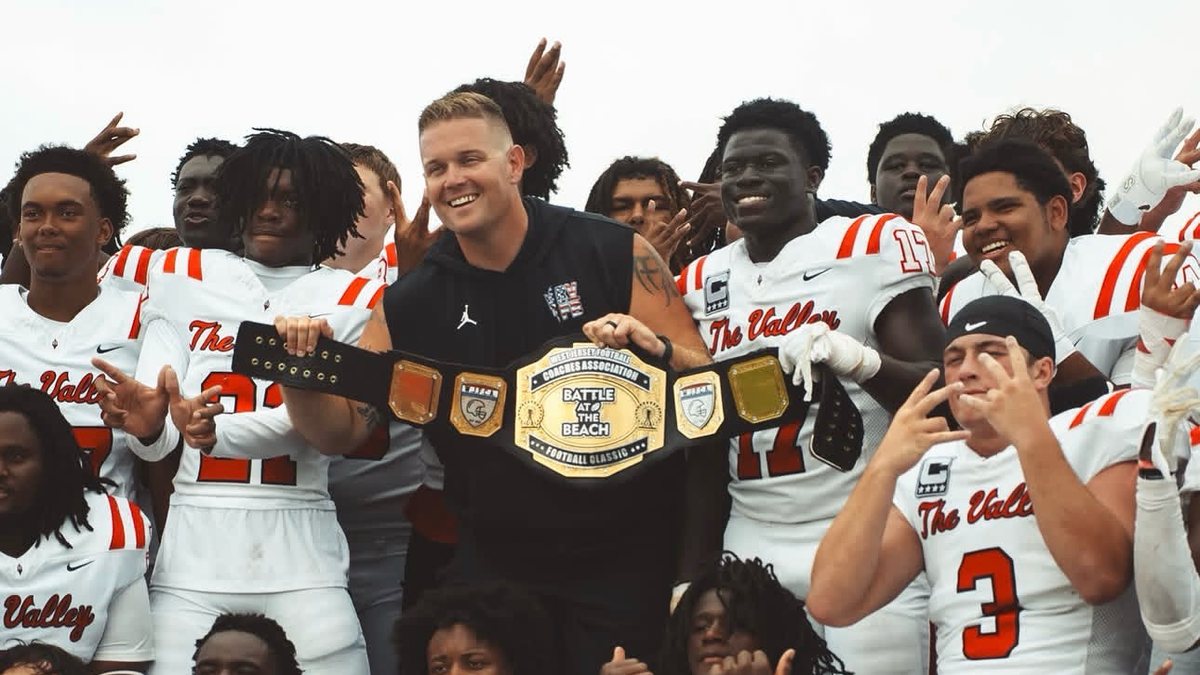 Garrett Lucas holds the Battle at the Beach belt with his Rancocas Valley players.
Garrett Lucas became a head coach at 24. His advice is about the first time a player tests you.
"Whatever you say you're going to do, you better do it, in terms of holding your kids accountable," he said. "If a kid's coming late, you better address it. If a kid is not wearing what he should be wearing, you better address it."
The hard part is doing it with your best player. Lucas is direct about why you have to: "why would a kid who's third-string JV think he should be held accountable if the best player is not?"
He ties it to game night. "If you let the small details go early on with these kids, it could jeopardize your season in a big moment."
Rocco Del Priore: We Before Me
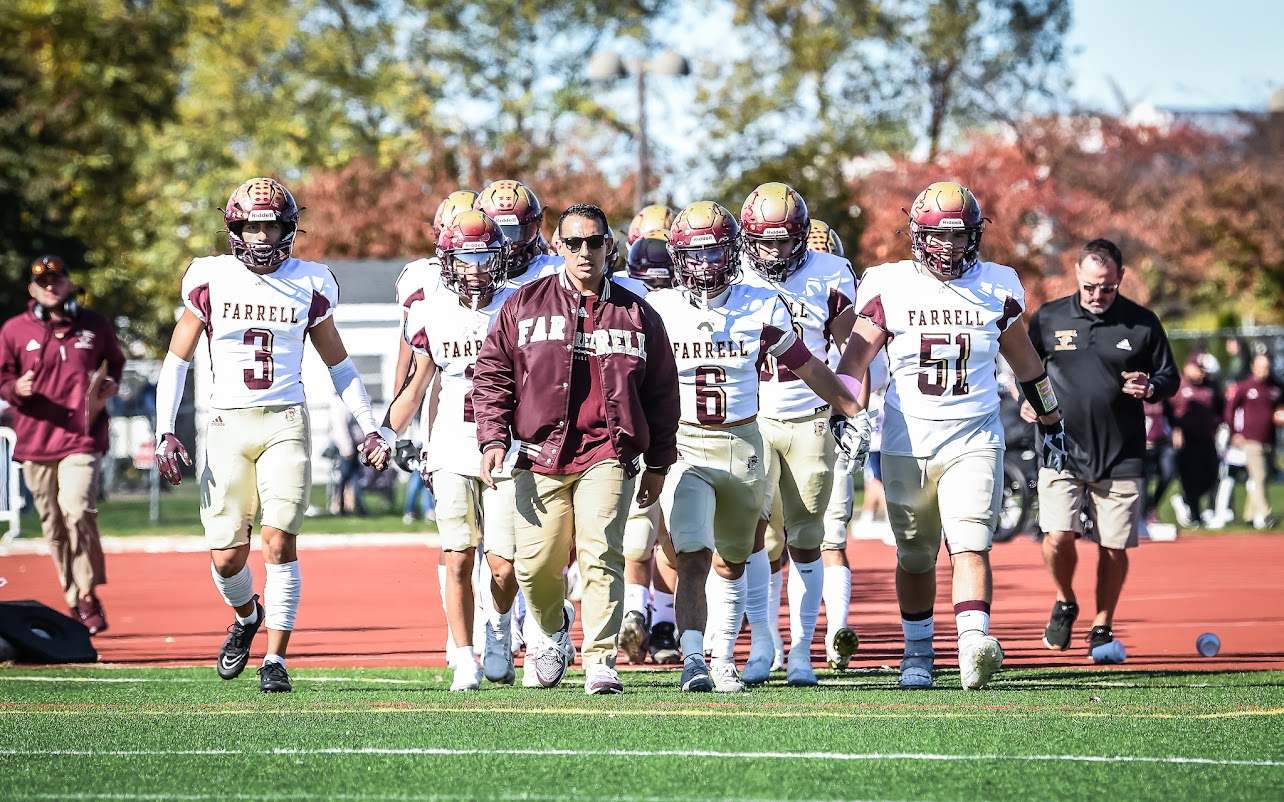 Rocco Del Priore leads the Monsignor Farrell Lions onto the field.
Most first jobs are not head coaching jobs. Rocco Del Priore spent seven years as a defensive coordinator before he took over Monsignor Farrell, and he spoke to the assistant directly.
"Be the best assistant coach you can be. And remember that it's the team."
He hears it in the pronouns coaches use: "it's not his position group, it's our position group. It's not his special teams, it's our special teams. It's always we before me."
Travis Harmon: Your Coaches Set the Standard
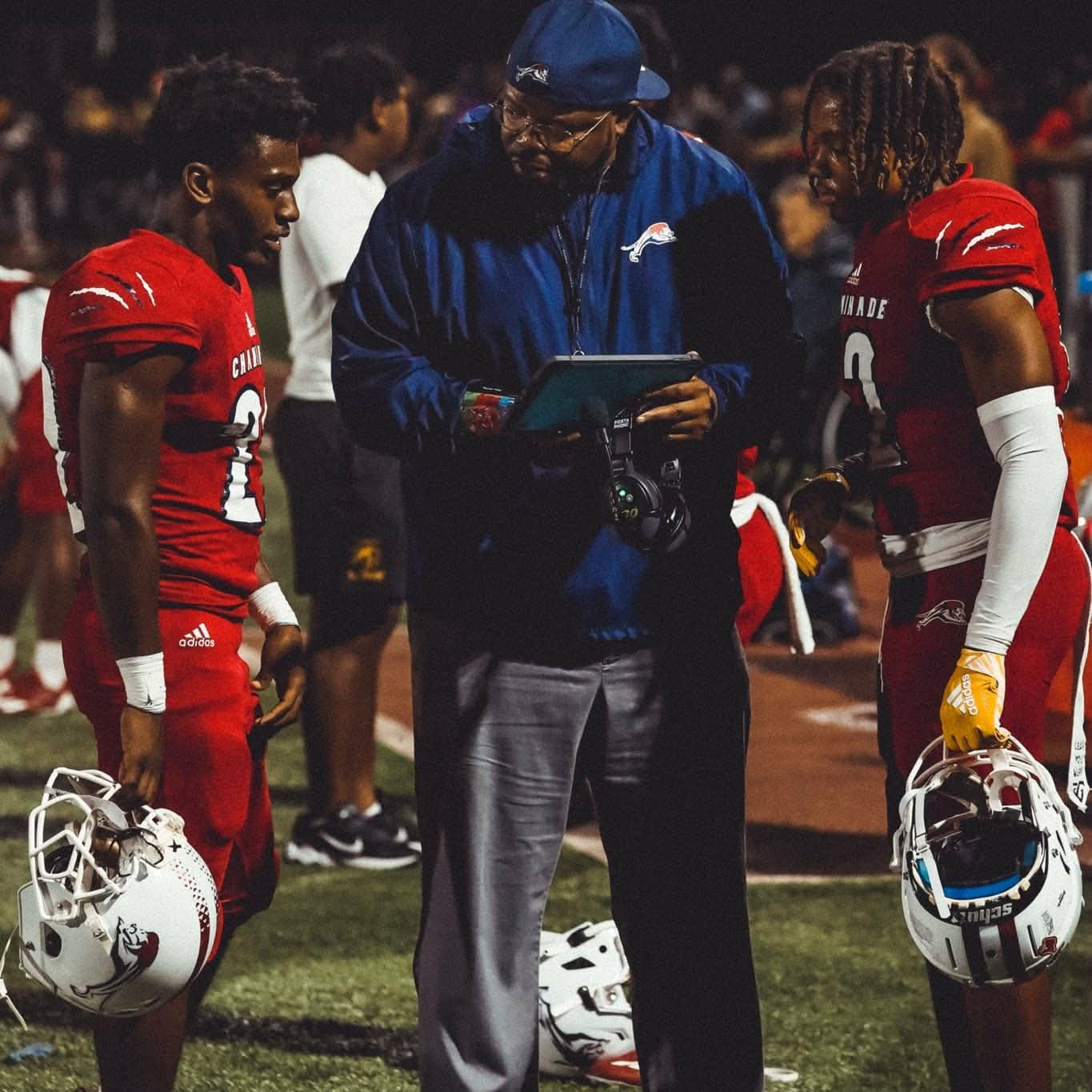 Travis Harmon shows two players something on a tablet on the sideline.
If you are the one hiring, Travis Harmon says the hires decide what your program is. "Your coaches set the standard."
He won six state championships as a coach at Chaminade-Madonna, and he wants coaches who are there for "Coaching. Teaching. Demanding the best."
He also warns about what success attracts. Once a program starts winning, people show up for the winning. "You've got to be careful of the people who come in just wanting to ride the name you've created."
Chris App: Don't Take Yourself Too Seriously
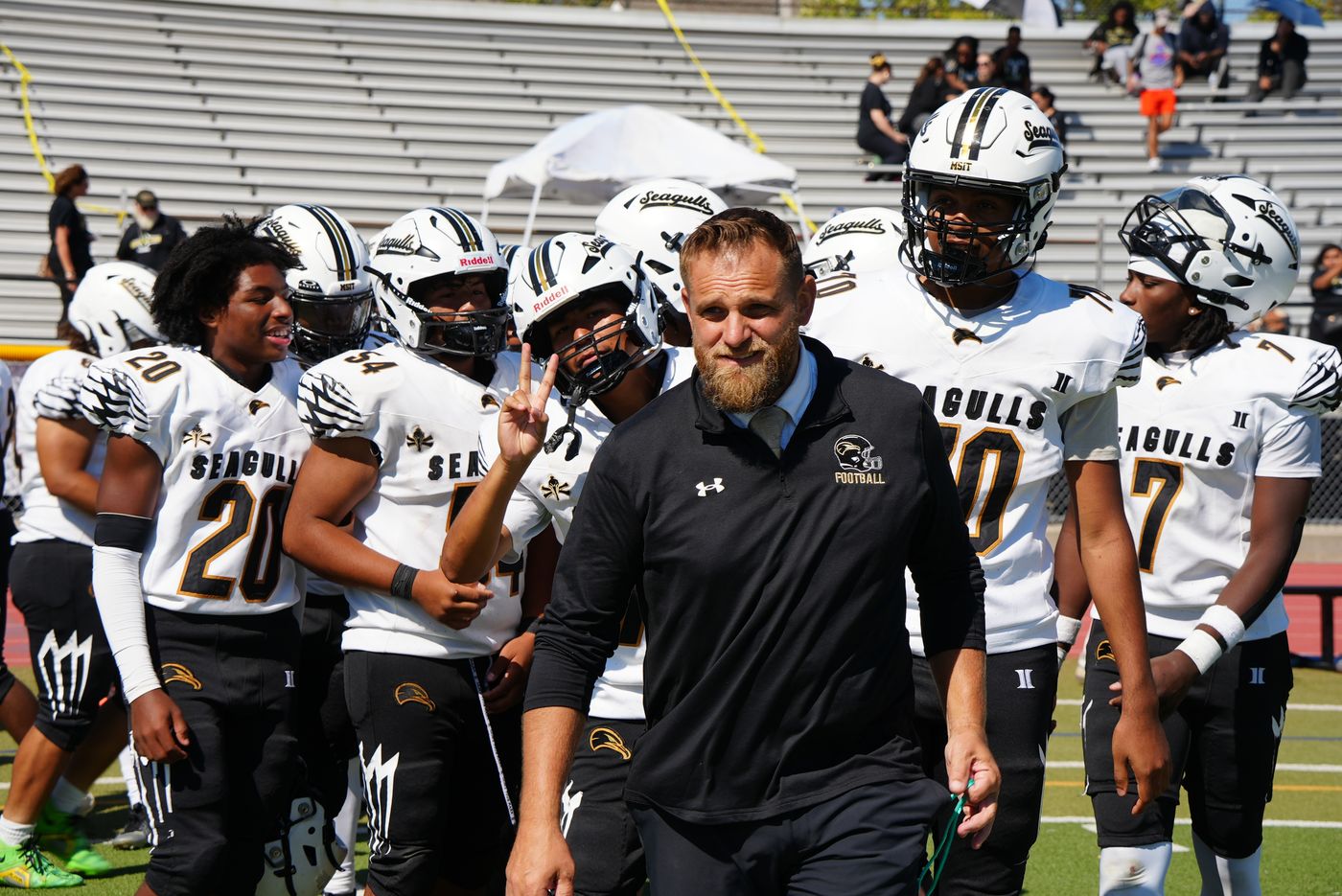 Chris App and the McKee Staten Island Tech Seagulls celebrate on the field.
Chris App, in his sixth season at McKee Staten Island Tech, gave the shortest opening line of anyone: "Don't take yourself too seriously."
His reason is that the plan will not survive the first practice. You will show up prepared, and then "a kid forgets his mouthpiece, or a coach forgets his practice script." You are working with high school kids, and some of it is out of your hands.
"So you breathe, you smile some things off, and you have a next-play mentality, the same one you ask of your kids."
The Short Version
- Go to work, and give it more than one season.
- When it goes wrong, it is on you.
- Ask questions. Write the answers down.
- Coach in your own voice.
- Learn every player's name, and something about him.
- Treat your part of the program like you are its head coach.
- Do what you said you would do, starting with your best player.
- Hire coaches who want to teach.
- Breathe. Next play.
1st and 10 is a Playside interview series. Every coach gets the same 10 questions. Read all of them on The Sideline.