Lincoln Riley Offense
also: Power Spread offense · Riley Power Spread · Oklahoma Offense
A power spread offensive system that fuses Air Raid passing concepts with heavy gap-scheme pulling runs, H-back sniffer alignments, and post-snap Glance RPOs.
The Lincoln Riley offense (popularized at Oklahoma and USC) bridged the divide between Hal Mumme / Mike Leach Air Raid pass-first spread offenses and physical, downhill gap-scheme rushing attacks.
While traditional Air Raid offenses rely primarily on five-man protections and quick dropback passing with light interior running, Riley built a hybrid 'Power Spread' system centered around physical offensive line movement and multi-alignment H-Back / sniffer sets:
- GT Counter
- The foundational run. The backside guard and tackle pull to kick out the frontside edge and lead through the C-gap crease, creating an extra gap without adding extra blockers in the box.
- Counter Bash
- An inverted read-option run. The running back threatens the weakside perimeter on a sweep while the quarterback reads the backside edge to keep behind the GT pullers, punishing flow linebackers.
- GT Counter + Glance RPO
- The signature constraint. The offensive line executes full GT Counter run blocking while the quarterback reads the backside inside linebacker. If the linebacker triggers downhill against the run, the quarterback pulls the ball and throws the 5-step Glance slant into the vacated window.
- Y-Cross
- The primary intermediate pass concept. The inside Y receiver climbs on a continuous Sail route to 12 to 14 yards depth behind flowing linebackers, paired with a vertical clearout post and backside dig checkdown.
- GT Counter Post-Wheel
- The signature play-action deep shot marrying GT Counter pulling action with a boundary wheel route by the H-back behind an outside post clearout.
By using pre-snap motions, sniffer formations, and tight end alignments, the offense forces defenses into light, two-high split-field coverages to stop the pass, then attacks the light box with physical gap schemes.
Power Spread, Riley Offense, Oklahoma SpreadAir Raid, Spread Option, Shoot and RunAt a glance
- Family
- Lincoln Riley
- Level fit
- high school, college
- Quarterback must throw
- yes
- Quarterback decision load
- medium (QB pre-snap, QB post-snap)
- Base formations
- Shotgun 2x2, Shotgun 3x1 Trips, Shotgun with an H-back / Sniffer
- Day one install
- GT Counter, GT Counter + Glance RPO, Y-Cross, GH Counter
- Borrows from
- Air Raid passing concepts and spacing (Hal Mumme and Mike Leach), Traditional gap-scheme power run blocking (GT Counter, Power), Modern post-snap RPO conflict reads and pre-snap orbit motions
- Transfers from
- Air Raid passing systems that already teach Y-Cross and Shallow Cross, Gap-scheme run offenses that already teach down blocks, kickouts, and pulling linemenWhat carries over if you already run something else.
- Belongs to
- nobody. It is a family, not one coach's system
Who it is for
Lincoln Riley's Power Spread is designed for programs that want the spacing and explosive passing efficiency of the Air Raid combined with the downhill physical identity of a gap-scheme power running game. It thrives when a team possesses an athletic, versatile H-back who can block at the point of attack and release into routes, paired with pulling linemen and an accurate quarterback capable of reading second-level defenders on the fly.
What it asks of a roster
- An accurate quarterback with rapid processing to execute mesh rides and post-snap RPO conflict throws
- A versatile hybrid H-back / sniffer capable of wrapping into the C-gap, sifting across the formation, and catching passes in the flat
- Athletic guards and tackles with mobility to pull flat and lead in space on Counter and Sweep plays
- Perimeter wide receivers with high football IQ to convert stems against zone vs man coverage
What the staff has to be able to teach
- Teaching offensive linemen to pull with clean pathing without tipping tendencies through pre-snap stagger
- Establishing consistent rules for post-snap RPO conflict reads on second-level linebackers
- Drilling sniffer H-back alignment versatility across C-gap wrap, backside sift, and flat releases
- Coordinating Air Raid intermediate route spacing (Y-Cross, Shallow Cross) against zone dropbacks
Formations
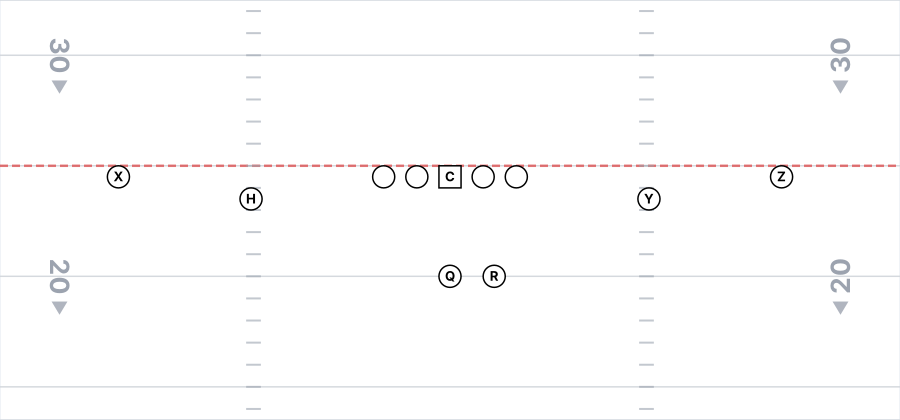
Shotgun 2x2two receivers to each side, running back offset from the quarterback, spreading defenses across the field before attacking with GT Counter 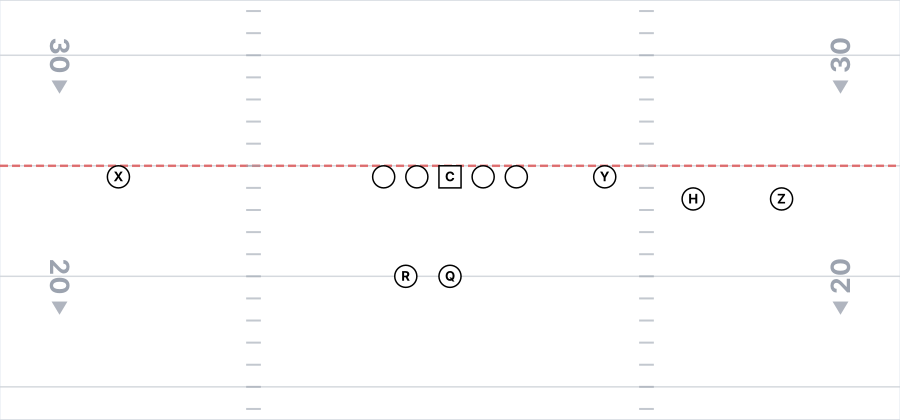
Shotgun 3x1 Tripsthree receivers to one side with an isolated X receiver on the single-receiver boundary, used for Y-Cross and Stick-Nod concepts 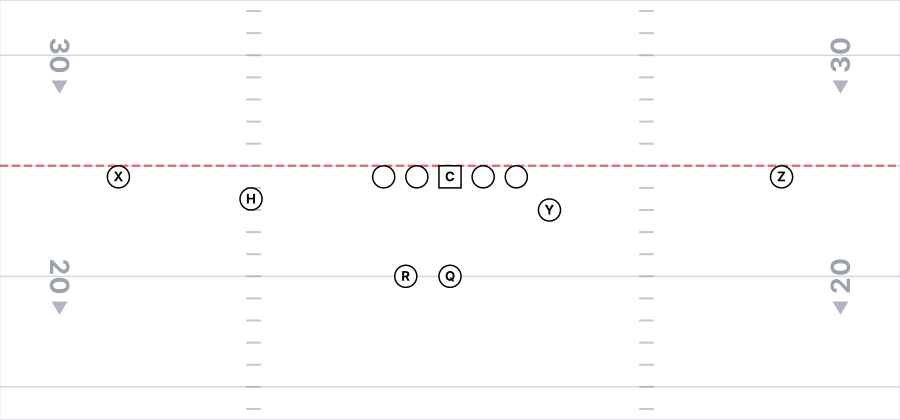
Shotgun with an H-back / SnifferH aligned off-ball in the sniffer position to execute C-gap wrap blocks, backside sift blocks, and flat/wheel route releases
Signature plays

GT Countergap-scheme misdirection run using a pulling backside guard to kick out and a backside tackle to wrap 
Bash Readinverted read option pairing an outside back sweep with an off-tackle Counter keep 
GT Counter + Glance RPOpost-snap Run-Pass Option pairing a GT Counter gap-scheme run with a backside glance route 
Y-CrossAir Raid and Power Spread passing concept with a deep crossing route behind second-level linebackers 
GT Counter Post-WheelExplosive play-action deep shot marrying GT Counter run fakes with a boundary wheel route behind a post clearout 
GH CounterTwo-puller gap-scheme run with the backside guard kicking out and the sniffer H-back leading into the C-gap crease 
GT Counter + Orbit RPOTriple-threat option marrying interior GT Counter with pre-snap orbit motion and a perimeter pitch option 
Split Zone + Bubble RPOPackaged run-pass option pairing inside zone and a backside sniffer sift block with a perimeter bubble screen 
Shallow CrossFoundational Air Raid passing concept creating an underneath high-low stretch with a shallow drag and intermediate dig 
Stick-NodRed-zone and seam passing constraint where the inside receiver fakes a stick out before bursting vertically up the seam
Anatomy of a play call
Calls typically feature a formation name (such as Early, Late, or Sniffer Gun), a motion tag (like Orbit or Trade), a core run scheme (such as Counter or Pin-Pull), and a route constraint attachment (such as Glance or Bubble).
Origins, and what it borrows
The offense originated from Lincoln Riley's background under Mike Leach at Texas Tech. While traditional Air Raid systems relied almost exclusively on five-man protections and quick dropback passing with minimal run variety, Riley identified that defenses were countering spread spacing with light, two-high split-field coverage shells. By marrying Air Raid route concepts with heavy GT Counter, GH Counter, and Pin & Pull gap schemes, Riley forced defenses to commit numbers back into the box, opening up devastating post-snap Glance RPOs and play-action deep shots over the top.
Who has run it
- Hal Mumme and Mike LeachIowa Wesleyan, Kentucky, Texas Tech, 1989 to 2009Created the foundational Air Raid passing concepts (Y-Cross, Mesh, Shallow Cross) that Riley learned as a quarterback and assistant at Texas Tech.
- Lincoln RileyTexas Tech, East Carolina, Oklahoma, USC, 2003 to presentPioneered the modern Power Spread by integrating physical GT Counter gap schemes, sniffer alignments, and post-snap Glance RPOs with Air Raid spacing, producing three Heisman Trophy-winning quarterbacks.
Resources
- SiteThe Lincoln Riley Offense: An In-Depth GuideThrow Deep PublishingComprehensive breakdown of GT Counter, Counter Bash, Y-Cross, and Glance RPO mechanics.
- SiteEvolution of the Power Spread: Read Option and Gap FitsMatchQuartersAnalysis of H-back sniffer run fits, second-level conflict reads, and defensive adjustments.
- SiteLincoln Riley Staff ProfileUSC AthleticsCareer history and offensive accomplishments at Texas Tech, East Carolina, Oklahoma, and USC.