Spread Option Offense
A run-oriented spread offense that makes the defense account for the quarterback as a ball carrier.
Spread Option marries shotgun spread formations with the principles of option football, making the quarterback a true ball-carrying threat to gain an 11-on-11 mathematical advantage in the run game. By spreading wide receivers across the field, the offense forces the defense to remove defenders from the box and defend all 53⅓ yards of width.
Historically, Spread Option is the modern evolution of traditional under-center option offenses (like the Veer and Wishbone). Where traditional option relied on a dive phase followed by an option pitch to a trailing back, modern spread option often replaces the pitch phase with an RPO pass (such as a Bubble Screen or glance route) thrown into the perimeter space vacated by conflicted defenders.
The core of the offense is built on varied read schemes rather than a single blocking rule:
- Zone Read
- The base concept. The offensive line blocks Inside Zone or Outside Zone away from the backside defensive end. If that end crashes on the running back, the quarterback pulls and keeps; if the end widens, the quarterback gives inside.
- Power Read (Inverted Veer)
- Inverts the give and keep paths using a gap scheme. The running back threatens the perimeter on a sweep while the quarterback reads the playside edge defender to keep downhill behind a pulling guard.
- Speed Option
- Eliminates the interior mesh to attack the perimeter immediately, reading the edge defender to keep vertically or pitch to a trailing back.
- Zone Read + Bubble
- A packaged RPO where the quarterback reads a perimeter overhang linebacker first, throwing the bubble screen if the defender triggers against the run, or continuing to the defensive end for Zone Read if the defender stays wide.
Spread Optionspread, RPO, veer, Air RaidAt a glance
- Family
- Spread Option
- Level fit
- high school, college
- Borrows from
- spread formations, option football, shotgun zone run game
- Belongs to
- nobody. It is a family, not one coach's system
Who it is for
Run it when your quarterback is one of your better runners and can make a clean decision after the snap. The numbers advantage only exists if the defense has to account for him on designed runs.
What it asks of a roster
- A quarterback who is a credible runner and can make a post-snap read of one defender
What the staff has to be able to teach
- A consistent rule for identifying the defender the quarterback reads on each read play
- Play-specific blocking rules: Zone Read uses zone tracks, while Power Read uses gap rules
Formations
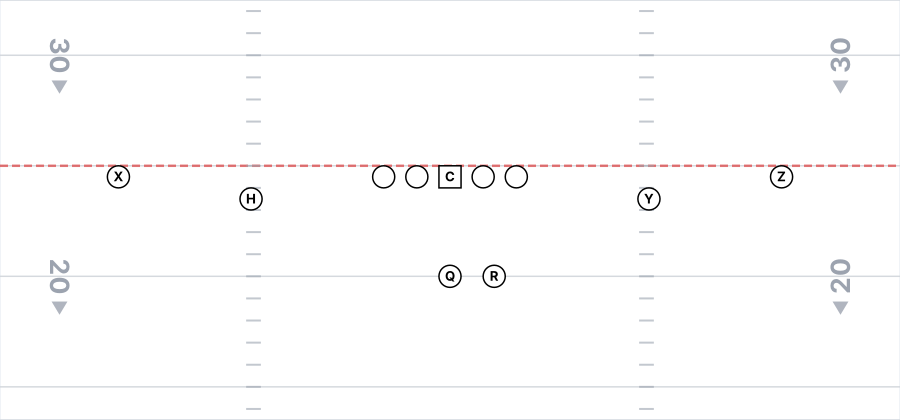
Shotgun 2x2two receivers to each side, one back offset from the quarterback and the whole width of the field occupied before the snap 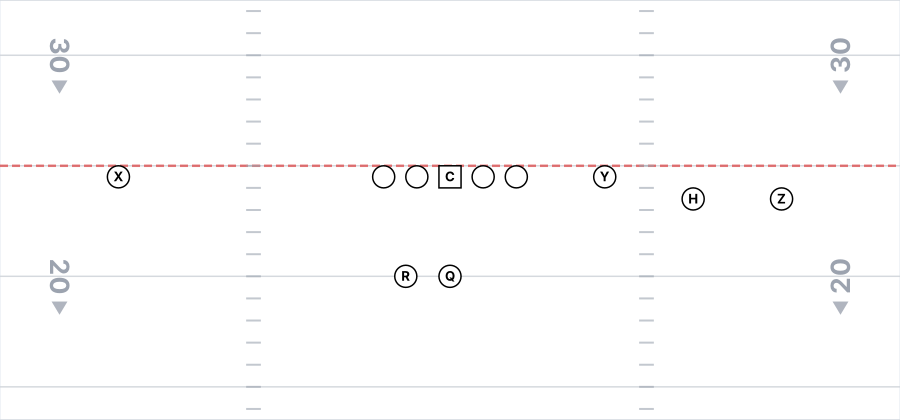
Shotgun 3x1three receivers to one side, an isolated X away from them and the back offset opposite the trips 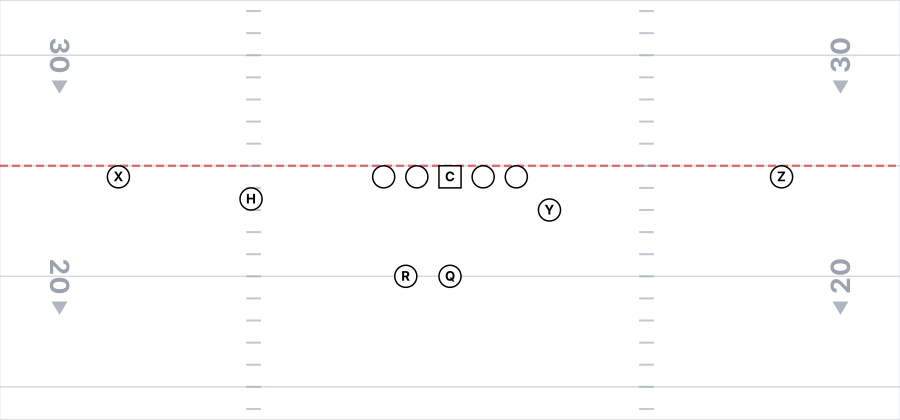
Shotgun with an H-backY moves into the backfield beside the right tackle, adding an insert or arc blocker without changing the other position labels
Signature plays

Zone Readzone run with one defender left unblocked for the quarterback to read after the snap 
Power Readpower blocking with an edge defender left unblocked to choose between the back's sweep and the quarterback's inside run 
Speed Optionperimeter option with no dive phase: the quarterback attacks the edge and keeps or pitches 
Zone Read + Bubbleinside Zone Read with a Bubble Screen attached to punish an overhang who joins the run fit
Origins, and what it borrows
Rich Rodriguez's branch put option reads into shotgun spread sets, keeping the numbers advantage of option football while moving receivers across the field. Other staffs changed the blocking, formations and tempo, so Spread Option became a family rather than one playbook.
Who has run it
- Rich RodriguezGlenville State, Tulane, Clemson and West Virginia, 1990 to 2007Developed and spread a no-huddle, zone-read branch that made shotgun option football a major college offense.
- Chip KellyOregon, 2007 to 2012Built an up-tempo read-option branch whose running game became one of the most visible versions of the family.
- Urban MeyerBowling Green, Utah, Florida and Ohio State, 2001 to 2018Built a physical spread branch around the added numbers created by a quarterback run threat.
- Lincoln RileyEast Carolina, Oklahoma and USC, 2010 to PresentIntegrated physical two-puller GT Counter and post-snap Glance RPOs into Air Raid spacing, establishing the modern Power Spread.
Resources
- SiteWVU Football Innovators: Rich Rodriguez and Jeff CasteelWest Virginia AthleticsThe development of Rodriguez's spread offense and the option runs that became its ground game.
- SiteUtilizing the Bash Concept in the Run GameTerrance Banks for USA FootballShows how the read game grew from Zone Read into Power Read, Counter Read and Bash variations.
- SiteCreative Uses of the Power SchemeUSA FootballExplains how Power Read leaves the normal kick-out defender unblocked and reads him instead.
- SiteBreaking Down Doug Patterson's Repo PlayUSA FootballShows an Inside Zone call with a Bubble Screen attached and two ordered post-snap reads.
Named systems in this family
- Lincoln Riley Power Spread
- Urban Meyer Power Spread
- Rich Rodriguez Zone Read
- Chip Kelly Blur Spread